
CALLGOOSE
CALLGOOSE
BLOG
24 March 2026 | Sophia Mark
5 Minute Read
Introduction
Service Level Agreements (SLAs) define the reliability commitments that SaaS providers make to their customers. These commitments typically include uptime guarantees, response times, and incident resolution targets.
While SLAs are essential for building customer trust, many organizations make a critical mistake when defining them: they set unrealistic SLA targets.
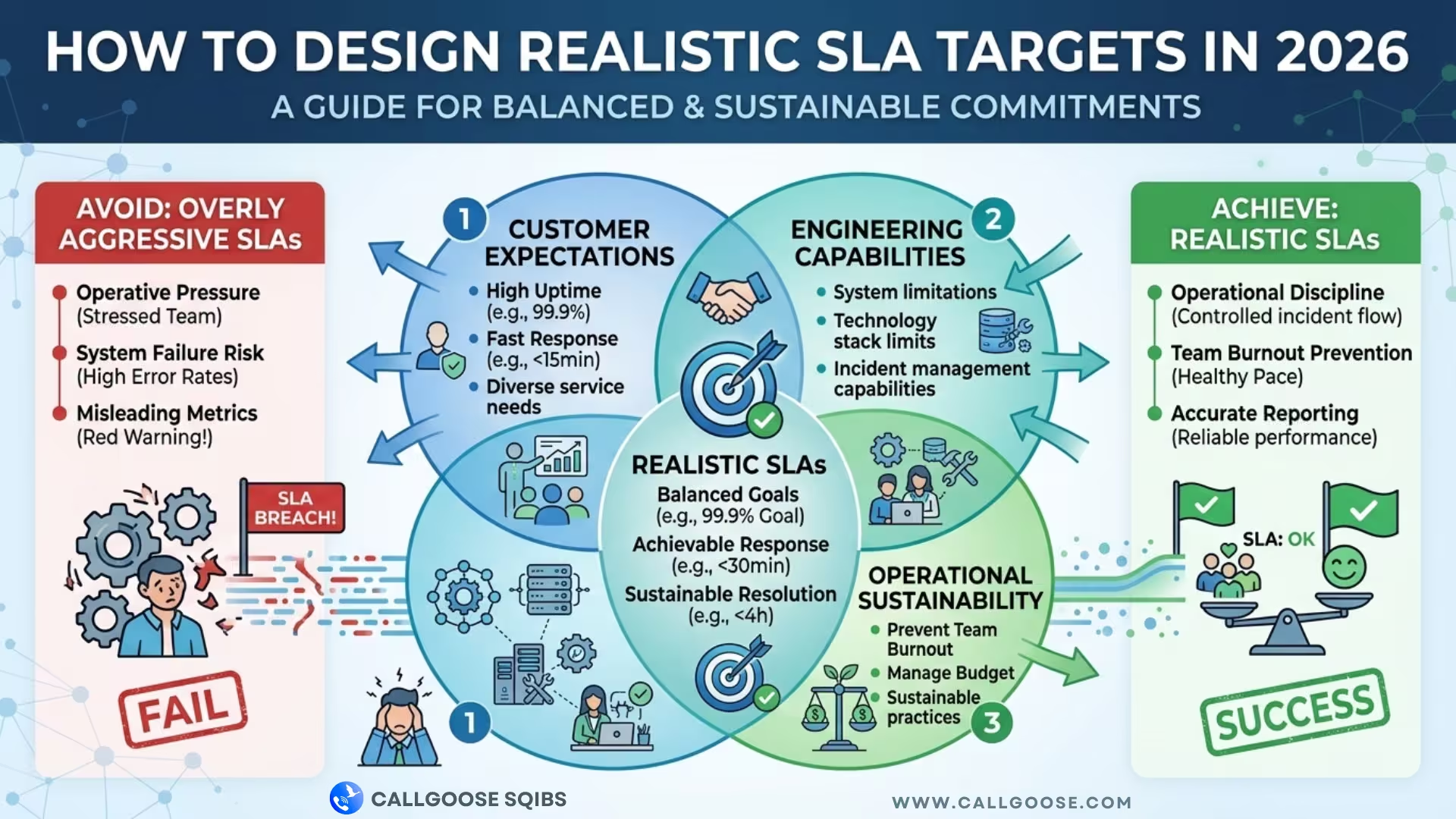
Overly aggressive SLAs may appear attractive from a marketing perspective, but they often create operational pressure, team burnout, and misleading performance metrics.
Designing realistic SLA targets requires careful planning that balances customer expectations, engineering capabilities, and operational sustainability.
This article explains how SaaS companies can design effective and realistic SLA targets in 2026 while maintaining both service reliability and healthy operational practices.
Why SLA Targets Matter for SaaS Businesses
SLAs are more than technical metrics, they are business commitments.
Customers rely on SLAs to understand the level of reliability they can expect from a service. These commitments influence purchasing decisions, vendor trust, and long-term partnerships.
Well-designed SLA targets help organizations:
However, poorly designed SLAs can have the opposite effect, creating operational stress without actually improving service reliability.
The Problem with Unrealistic SLA Goals
Many organizations attempt to differentiate themselves by advertising extremely high uptime commitments such as 99.999% availability.
While these targets may sound impressive, they are often unrealistic unless the platform architecture and operational processes can truly support that level of reliability.
To understand the implications, consider the downtime allowances for different SLA levels:
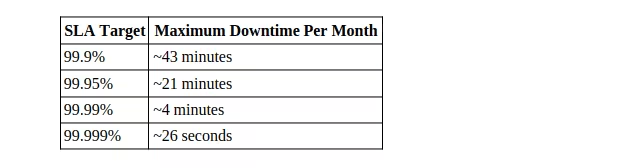
Achieving extremely high uptime targets requires:
Without these capabilities, aggressive SLA targets become difficult to maintain.
Unrealistic SLAs Can Lead to Team Burnout
One of the hidden consequences of unrealistic SLA targets is operational burnout.
When organizations promise extremely tight response and resolution targets, engineering teams may face constant pressure to maintain those commitments.
This pressure can manifest in several ways:
Over time, this operational stress can reduce team productivity and negatively impact service quality.
Sustainable reliability requires balancing service expectations with realistic operational capacity.
Misleading Metrics and Operational Behavior
Overly aggressive SLAs can also lead to misleading operational metrics.
When teams are measured against unrealistic targets, they may unintentionally adopt behaviors that distort performance reporting.
Examples include:
These practices create inaccurate reliability data, making it difficult for organizations to identify genuine operational problems.
Effective SLA targets should encourage transparent reporting and continuous improvement, not metric manipulation.
Designing Priority-Based Response Targets
One effective approach to designing realistic SLAs is priority-based response targets.
Not all incidents have the same business impact. Critical outages require immediate attention, while minor issues can be handled with lower urgency.
By defining response targets based on incident priority, organizations can align operational effort with business impact.
Example structure:
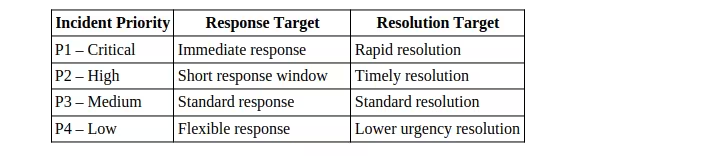
This structure ensures that teams focus their efforts on incidents that truly affect customers.
Priority-based response models also improve operational efficiency and reduce unnecessary escalation.
Aligning SLAs with System Architecture
Another key factor in designing realistic SLAs is understanding system architecture.
Service reliability depends heavily on infrastructure design.
Platforms with strong redundancy and failover capabilities can support more aggressive SLA targets than systems with limited redundancy.
Engineering teams should evaluate factors such as:
Industry research from the Uptime Institute consistently shows that architecture design plays a critical role in preventing service outages.
Organizations should align SLA commitments with the actual reliability characteristics of their systems.
Monitoring SLA Performance in Real Time
Once SLA targets are defined, organizations must monitor them continuously.
Manual SLA tracking often leads to delayed breach detection and inaccurate reporting.
Modern reliability platforms provide automated SLA monitoring that includes:
These capabilities allow teams to detect reliability risks early and respond before SLA commitments are violated.
Real-time monitoring also provides the operational data needed to refine SLA targets over time.
The Role of Incident Response Metrics
Response-time metrics such as Mean Time to Acknowledge (MTTA) and Mean Time to Resolve (MTTR) are important indicators of operational performance.
Organizations should define response targets that align with realistic operational capabilities.
Monitoring these metrics helps teams:
When MTTA and MTTR metrics improve, organizations can gradually refine their SLA targets with greater confidence.
Supporting SLA Planning with Callgoose SQIBS
Platforms such as Callgoose SQIBS help organizations implement structured SLA strategies through integrated reliability monitoring.
The platform enables teams to:
Callgoose SQIBS also includes Incident Response Threshold monitoring, which helps enforce response-time accountability across teams.
By combining SLA monitoring with incident response management, organizations can build reliability strategies that are both measurable and sustainable.
Callgoose SQIBS supports SaaS and self-hosted deployments, allowing organizations to adopt reliability tooling in ways that match their infrastructure and compliance needs.
Final Thoughts
Designing realistic SLA targets is one of the most important steps in building a sustainable reliability strategy.
While aggressive SLAs may appear attractive from a marketing perspective, they can create operational stress and misleading performance metrics if they are not aligned with engineering capabilities.
Effective SLA design should focus on:
By aligning SLA targets with infrastructure capabilities and operational processes, SaaS organizations can maintain strong reliability commitments without creating unnecessary pressure on their teams.
In 2026, the most successful SaaS companies are not the ones that promise the highest SLAs, they are the ones that design realistic reliability commitments and consistently deliver on them.
🔗 Get Started with Callgoose SQIBS: Try Now
If you're managing critical IT systems or have customer-facing platforms, Callgoose SQIBS is a game-changer! 💡 It’s designed to quickly fix issues, reduce downtime, and boost your support team’s productivity.
Callgoose SQIBS is a cutting-edge automation platform designed to elevate your organization's resilience, reliability, and operational efficiency. With powerful On-Call scheduling, real-time Incident Management, SLA Tracker and Incident Response capabilities, it ensures your systems are always on and responsive. Whether you need Process Automation, Runbook Automation, Incident Auto-remediation, IT request automation, or Event-Driven Automation and Self-service portal, Callgoose SQIBS empowers you with comprehensive solutions. Stay connected and in control with notifications via Mobile App (Android, iPhone), Email, SMS, Phone Calls in over 30+ languages across 200+ countries, and seamless integrations with Slack & Microsoft Teams. Empower your team to Trigger, Acknowledge, Resolve Incidents and Run Automation Workflow directly from Slack & Microsoft Teams.
Check out these videos to see how it works:
• Watch our quick 30-second video : Watch Here
• What is Callgoose SQIBS? : Watch Here
• Process Automation : Watch Here
• Runbook Automation : Watch Here
• Self-Service Portal : Watch Here
• SLA Tracker : Watch Here
Additionally, here is a helpful blog post on
• why businesses choose Callgoose SQIBS: Why Business Need to Choose Callgoose SQIBS
• Transforming Business Operations with Callgoose SQIBS - Incident Management & Automation Platform
• How Callgoose SQIBS Automation Platform Enhances Efficiency
• Use Cases Industry Sector-wise
• Solutions – By Functionality
Ready to Transform Your Incident Response?
See Callgoose SQIBS in action by exploring our website visit www.callgoose.com, or book a demo to discover how Callgoose SQIBS can optimize your workflows and boost your team’s productivity.
Let’s Talk! Reach out to us today to learn more or get personalized support.
Take the next step toward seamless automation and efficiency. We’re here to assist you every step of the way.
Take Control of Incidents – Anytime, Anywhere!
Looking forward to connecting with you!

BLOG
5m Read
Atlassian Opsgenie is Ending - Why Callgoose SQIBS is the Best Alternative for Your Incident Management & Automation Needs
08 March 2025
|
Tony Philip
Introduction Atlassian has announced that new sales of Opsgenie will be discontinued on June 4, 2025, and support will officially end on April 5, 2027. With this change, Opsgenie users must migrate to...

BLOG
5m Read

CALLGOOSE
SQIBS
Advanced Automation-first platform with effective On-Call scheduling, real-time Incident Management, Incident Response, and SLA tracking capabilities that keep your organization more resilient, reliable, and always on.
Callgoose SQIBS can integrate with any applications or tools you use, including monitoring, ticketing, ITSM, log management, error tracking, ChatOps, collaboration tools, or any custom applications.
In addition to alerting and response, Callgoose SQIBS enables Automated Incident Remediation, SLA tracking (MTTA, MTTR, uptime), and Incident Response Threshold monitoring, allowing teams to proactively detect risks, prevent SLA breaches, and execute remediation workflows in real time.
A built-in self-service portal empowers end users to handle routine requests independently, significantly reducing operational load on engineering and IT teams.
Callgoose provides enterprise-grade automation, SLA governance, and incident response capabilities at one of the most cost-effective price points in the market.
Unique Features