
CALLGOOSE
CALLGOOSE
BLOG
18 March 2026 | Sophia Mark
5 Minute Read
Introduction
In many organizations, incident management begins with a simple idea: start a timer when an incident occurs and track how long it takes to resolve it. Traditional IT tools often implement this approach using basic incident timers.
However, as SaaS platforms, cloud infrastructure, and distributed systems have evolved, simple timers are no longer sufficient to manage modern operational environments.
In 2026, organizations require more advanced mechanisms that enforce accountability, trigger automated escalation, and ensure incidents are handled within defined response windows.
This is where Incident Response Threshold systems come into play.
Unlike traditional timers, Incident Response Threshold mechanisms actively monitor response timelines and automatically trigger alerts when response commitments are at risk.
This article explains the differences between traditional incident timers and modern Incident Response Threshold systems, and why many organizations are transitioning toward the latter.
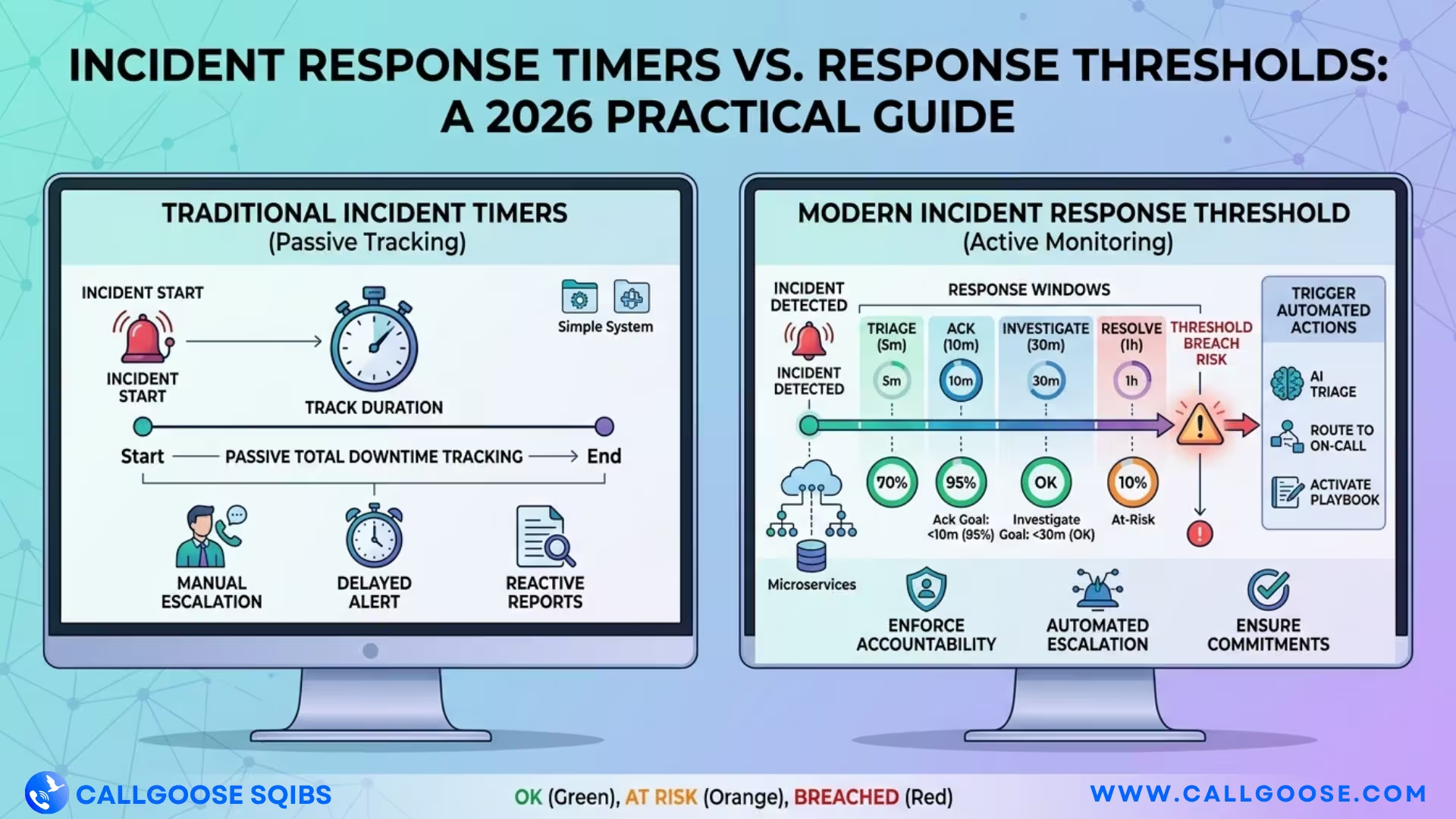
The Traditional Incident Timer Approach
Traditional incident management systems often rely on simple timers.
These timers typically measure:
The timer usually starts when an incident is created and stops when the incident is closed.
While this provides a basic measurement of incident duration, it has several limitations.
Traditional timers usually do not enforce operational accountability. They simply record how long an incident lasted without actively ensuring that teams respond within acceptable timeframes.
This makes them useful for reporting, but not for real-time operational control.
Limitations of Traditional Incident Timers
Although simple timers can measure incident duration, they lack many of the capabilities required for modern reliability operations.
1. Limited Escalation Capabilities
Most traditional timers do not automatically escalate incidents when response timelines are exceeded.
If a team fails to acknowledge or resolve an incident quickly, the timer will continue running without notifying additional responders.
This can lead to situations where incidents remain unattended for longer than expected.
2. Lack of Priority Awareness
Incidents often vary significantly in severity.
For example:
Traditional timers typically treat all incidents equally.
They do not automatically adjust response expectations based on incident priority. This creates operational gaps where critical incidents may not receive the urgent attention they require.
3. No Retrigger or Reminder Alerts
Another limitation is the absence of retrigger notifications.
If an incident remains unresolved for an extended period, traditional timers usually do not remind responders that action is still required.
As a result, teams may overlook incidents that require continued attention.
4. Reactive Rather Than Proactive
Traditional timers mainly function as historical tracking tools.
They allow teams to analyze incident duration after the fact, but they do not actively prevent slow response times while incidents are still ongoing.
Modern incident operations require real-time response monitoring, not just retrospective analysis.
The Modern Incident Response Threshold Approach
Modern reliability platforms use Incident Response Threshold systems instead of simple timers.
An Incident Response Threshold defines the maximum acceptable time for key stages of incident handling, such as:
When these thresholds are exceeded, the system automatically triggers alerts and escalation workflows.
Instead of simply measuring time, Incident Response Threshold systems enforce operational response expectations.
Priority-Based Thresholds Improve Incident Handling
One of the most powerful capabilities of Incident Response Threshold systems is priority-based response thresholds.
Organizations can define different response expectations depending on incident severity.
For example:
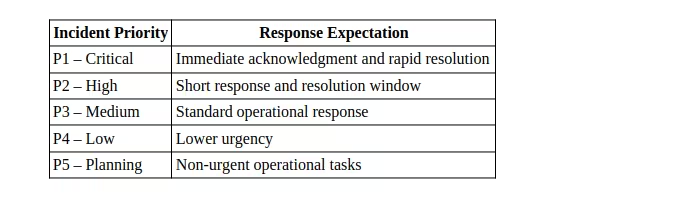
This ensures that critical incidents receive faster attention while lower-priority issues are handled appropriately.
Priority-based thresholds significantly improve incident response discipline across teams.
Retrigger Alerts Ensure Continuous Awareness
Modern Incident Response Threshold systems also support retrigger alerts.
Retrigger alerts ensure that incidents do not become forgotten or ignored.
If an incident remains unresolved after exceeding its defined threshold, the system can continue sending notifications at defined intervals.
For example:
This continuous alerting mechanism helps maintain operational awareness during long-running incidents.
Escalation Policies Improve Accountability
Escalation policies are another key component of modern incident management.
If an incident remains unresolved or unacknowledged, escalation workflows automatically notify additional responders.
Typical escalation paths may include:
These automated escalation workflows ensure that incidents receive the attention required to maintain service reliability.
Organizations that implement structured escalation processes typically achieve faster response times and improved incident resolution outcomes.
Real-Time Incident Monitoring
Another advantage of Incident Response Threshold systems is real-time operational visibility.
Instead of passively recording incident duration, these systems continuously monitor response timelines and detect potential delays.
This allows teams to:
Real-time monitoring transforms incident management from a passive reporting process into an active operational control system.
Supporting Modern Incident Response with Callgoose SQIBS
Modern platforms such as Callgoose SQIBS implement advanced incident response capabilities through features like Incident Response Threshold monitoring.
These systems allow organizations to:
Unlike traditional incident timers, these mechanisms actively enforce response-time accountability.
Callgoose SQIBS also integrates incident response monitoring with SLA tracking, giving organizations a comprehensive view of service reliability and incident performance.
The platform supports both SaaS deployment and self-hosted environments, allowing organizations to adopt reliability automation in a way that aligns with their infrastructure and compliance requirements.
Final Thoughts
Traditional incident timers were designed for a simpler operational era. While they can measure how long incidents last, they do not actively enforce response discipline or prevent slow incident handling.
Modern operational environments require more advanced mechanisms that ensure incidents are addressed quickly and escalated when necessary.
Incident Response Threshold systems provide these capabilities through:
As SaaS platforms continue to grow in complexity, organizations are increasingly adopting these modern incident response models to maintain service reliability and meet customer expectations.
In 2026, effective incident management is no longer just about measuring time it is about enforcing response accountability and preventing operational delays.
🔗 Get Started with Callgoose SQIBS: Try Now
If you're managing critical IT systems or have customer-facing platforms, Callgoose SQIBS is a game-changer! 💡 It’s designed to quickly fix issues, reduce downtime, and boost your support team’s productivity.
Callgoose SQIBS is a cutting-edge automation platform designed to elevate your organization's resilience, reliability, and operational efficiency. With powerful On-Call scheduling, real-time Incident Management, SLA Tracker and Incident Response capabilities, it ensures your systems are always on and responsive. Whether you need Process Automation, Runbook Automation, Incident Auto-remediation, IT request automation, or Event-Driven Automation and Self-service portal, Callgoose SQIBS empowers you with comprehensive solutions. Stay connected and in control with notifications via Mobile App (Android, iPhone), Email, SMS, Phone Calls in over 30+ languages across 200+ countries, and seamless integrations with Slack & Microsoft Teams. Empower your team to Trigger, Acknowledge, Resolve Incidents and Run Automation Workflow directly from Slack & Microsoft Teams.
Check out these videos to see how it works:
• Watch our quick 30-second video : Watch Here
• What is Callgoose SQIBS? : Watch Here
• Process Automation : Watch Here
• Runbook Automation : Watch Here
• Self-Service Portal : Watch Here
• SLA Tracker : Watch Here
Additionally, here is a helpful blog post on
• why businesses choose Callgoose SQIBS: Why Business Need to Choose Callgoose SQIBS
• Transforming Business Operations with Callgoose SQIBS - Incident Management & Automation Platform
• How Callgoose SQIBS Automation Platform Enhances Efficiency
• Use Cases Industry Sector-wise
• Solutions – By Functionality
Ready to Transform Your Incident Response?
See Callgoose SQIBS in action by exploring our website visit www.callgoose.com, or book a demo to discover how Callgoose SQIBS can optimize your workflows and boost your team’s productivity.
Let’s Talk! Reach out to us today to learn more or get personalized support.
Take the next step toward seamless automation and efficiency. We’re here to assist you every step of the way.
Take Control of Incidents – Anytime, Anywhere!
Looking forward to connecting with you!

CALLGOOSE
SQIBS
Advanced Automation-first platform with effective On-Call scheduling, real-time Incident Management, Incident Response, and SLA tracking capabilities that keep your organization more resilient, reliable, and always on.
Callgoose SQIBS can integrate with any applications or tools you use, including monitoring, ticketing, ITSM, log management, error tracking, ChatOps, collaboration tools, or any custom applications.
In addition to alerting and response, Callgoose SQIBS enables Automated Incident Remediation, SLA tracking (MTTA, MTTR, uptime), and Incident Response Threshold monitoring, allowing teams to proactively detect risks, prevent SLA breaches, and execute remediation workflows in real time.
A built-in self-service portal empowers end users to handle routine requests independently, significantly reducing operational load on engineering and IT teams.
Callgoose provides enterprise-grade automation, SLA governance, and incident response capabilities at one of the most cost-effective price points in the market.
Unique Features