
CALLGOOSE
CALLGOOSE
BLOG
10 August 2026 | Sophia Mark
5 Minute Read
Introduction
Modern IT operations depend on on-call teams to respond quickly when critical incidents occur. Whether it's an infrastructure outage, application failure, security event, or business service disruption, organizations rely on well-planned on-call schedules to ensure the right people are available at the right time.
However, while on-call schedules are carefully designed, day-to-day operations are rarely predictable. Team members may become unavailable unexpectedly, planned leave may coincide with a critical project, or responsibilities may need to shift temporarily due to changing operational priorities. When these situations arise, organizations need a way to adjust on-call coverage without disrupting their carefully planned schedules.
Why Temporary Changes Can Become Operational Challenges
Many organizations manage on-call schedules weeks or even months in advance. Rebuilding or modifying those schedules every time a temporary change is required can quickly become an administrative burden.
Frequent manual schedule updates may also increase the risk of errors. An incorrect change can result in alerts being routed to the wrong person or create confusion about who is responsible for responding to an incident. During critical situations, even small scheduling mistakes can delay response times and impact service availability.
Instead of continually modifying the underlying schedule, organizations benefit from a solution that allows temporary adjustments while keeping the primary rotation intact.
Building Flexibility into On-Call Operations
Effective incident response requires both structure and flexibility. While consistent on-call rotations provide operational stability, teams also need the ability to adapt when unexpected situations occur.
Temporary coverage changes should be simple to manage, clearly defined, and automatically expire when no longer required. This allows organizations to respond to operational changes without introducing unnecessary complexity into long-term schedule management.
How Callgoose SQIBS Helps
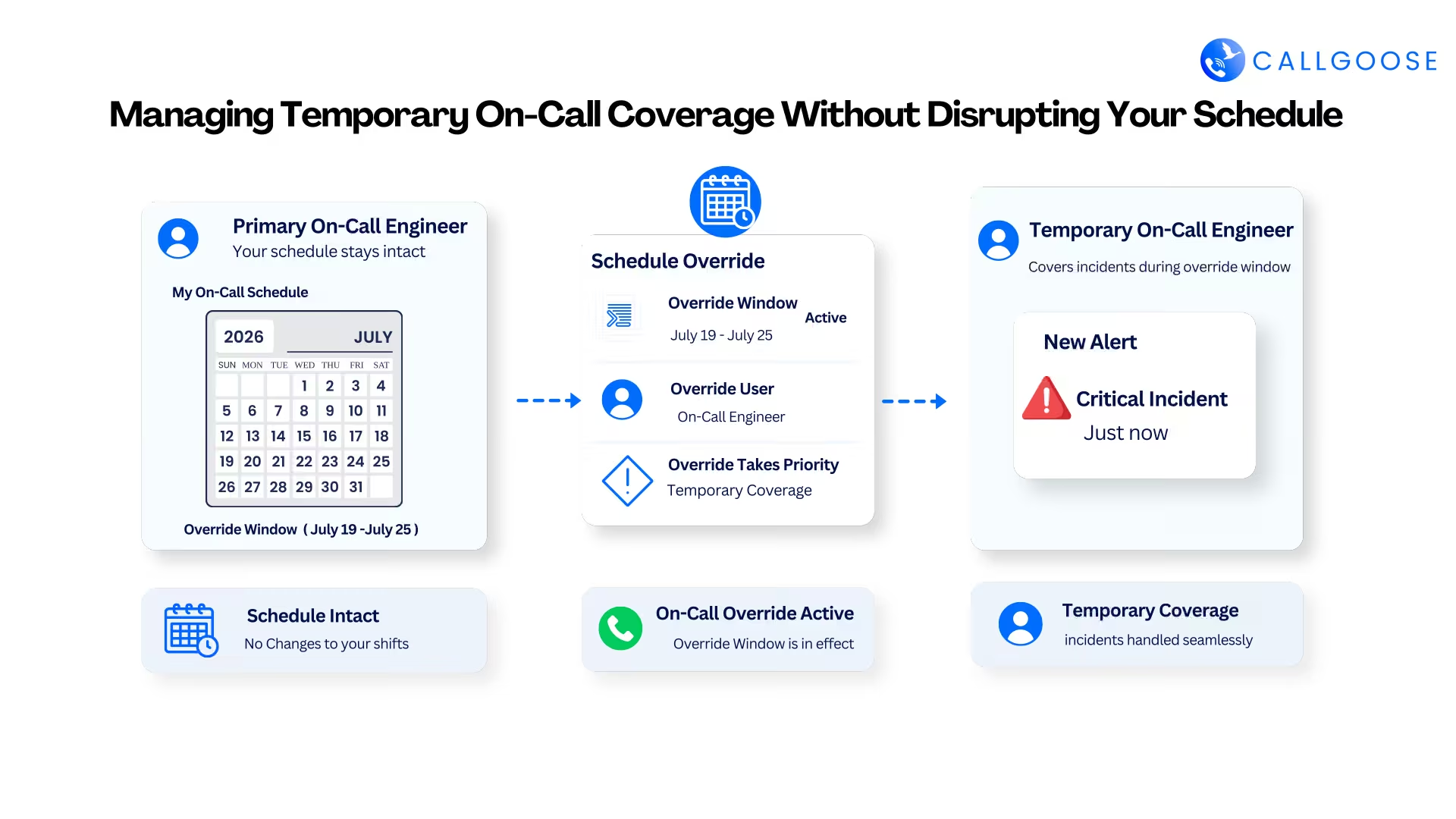
Callgoose SQIBS addresses this challenge through its Schedule Override capability, allowing organizations to temporarily assign another user to handle on-call responsibilities for a specific period without modifying the underlying schedule.
During the configured override window, the assigned override user takes priority over the regular schedule and receives on-call notifications for that period. Once the override expires, the original schedule automatically resumes, eliminating the need to manually restore the previous configuration.
This approach allows organizations to handle temporary staffing changes while maintaining the integrity of their existing on-call schedules.
Supporting Controlled Schedule Changes
Operational flexibility should never come at the expense of governance. Organizations often need to ensure that temporary schedule changes follow established approval processes while still allowing administrators to respond quickly when required.
Callgoose SQIBS supports configurable approval settings for Schedule Overrides, enabling organizations to determine when user approval is required before an override becomes active. At the same time, Global Admins and Team Managers can make immediate scheduling adjustments when operational situations demand quick action.
When multiple overrides exist for the same schedule and time period, Callgoose SQIBS applies a predictable precedence rule, ensuring the most recent override takes effect without requiring manual conflict resolution.
Improving Business Continuity
Temporary schedule changes are a normal part of modern operations. Employees take leave, projects require additional expertise, and operational priorities shift throughout the year. Managing these situations efficiently helps organizations maintain continuous incident response without placing additional administrative burden on operations teams.
By supporting temporary coverage changes without altering long-term schedules, organizations can improve operational continuity while reducing the complexity of schedule management.
Conclusion
Reliable incident response depends on more than creating on-call schedules it also requires the flexibility to adapt when circumstances change. Organizations need a practical way to manage temporary coverage without rebuilding carefully planned rotations every time an unexpected situation arises.
With Schedule Override, Callgoose SQIBS enables organizations to handle temporary on-call changes through controlled, time-based assignments while preserving their existing schedules. By combining flexible scheduling with configurable approval controls and automatic restoration of the original schedule, organizations can maintain continuous coverage and respond confidently to changing operational needs.
🔗 Get Started with Callgoose SQIBS: Try Now
If you’re managing critical IT systems or have customer-facing platforms, Callgoose SQIBS is a game-changer! 💡 It’s designed to quickly fix issues, reduce downtime, and boost your support team’s productivity.
Callgoose SQIBS is a cutting-edge automation platform designed to elevate your organization’s resilience, reliability, and operational efficiency. With powerful On-Call scheduling, real-time Incident Management, SLA Tracker and Incident Response capabilities, it ensures your systems are always on and responsive. Whether you need Process Automation, Runbook Automation, Incident Auto-remediation, IT request automation, or Event-Driven Automation and Self-service portal, Callgoose SQIBS empowers you with comprehensive solutions. Stay connected and in control with notifications via Mobile App (Android, iPhone), Email, SMS, Phone Calls in over 30+ languages across 200+ countries, and seamless integrations with Slack & Microsoft Teams. Empower your team to Trigger, Acknowledge, Resolve Incidents and Run Automation Workflow directly from Slack & Microsoft Teams.
Check out these videos to see how it works:
• Watch our quick 30-second video : Watch Here
• What is Callgoose SQIBS? : Watch Here
• Process Automation : Watch Here
• Runbook Automation : Watch Here
• Self-Service Portal : Watch Here
• SLA Tracker : Watch Here
Additionally, here is a helpful blog post on
• why businesses choose Callgoose SQIBS: Why Business Need to Choose Callgoose SQIBS
• Transforming Business Operations with Callgoose SQIBS — Incident Management & Automation Platform
• How Callgoose SQIBS Automation Platform Enhances Efficiency
• Use Cases Industry Sector-wise
• Solutions — By Functionality
Ready to Transform Your Incident Response?
See Callgoose SQIBS in action by exploring our website visit www.callgoose.com, or book a demo to discover how Callgoose SQIBS can optimize your workflows and boost your team’s productivity.
Let’s Talk! Reach out to us today to learn more or get personalized support.
Take the next step toward seamless automation and efficiency. We’re here to assist you every step of the way.
Take Control of Incidents — Anytime, Anywhere!
Looking forward to connecting with you!

CALLGOOSE
SQIBS
Advanced Automation-first platform with effective On-Call scheduling, real-time Incident Management, Incident Response, and SLA tracking capabilities that keep your organization more resilient, reliable, and always on.
Callgoose SQIBS can integrate with any applications or tools you use, including monitoring, ticketing, ITSM, log management, error tracking, ChatOps, collaboration tools, or any custom applications.
In addition to alerting and response, Callgoose SQIBS enables Automated Incident Remediation, SLA tracking (MTTA, MTTR, uptime), and Incident Response Threshold monitoring, allowing teams to proactively detect risks, prevent SLA breaches, and execute remediation workflows in real time.
A built-in self-service portal empowers end users to handle routine requests independently, significantly reducing operational load on engineering and IT teams.
Callgoose provides enterprise-grade automation, SLA governance, and incident response capabilities at one of the most cost-effective price points in the market.
Unique Features