
CALLGOOSE
CALLGOOSE
BLOG
26 March 2026 | Sophia Mark
5 Minute Read
Introduction
For SaaS companies, maintaining Service Level Agreements (SLAs) is essential for protecting customer trust, ensuring contractual compliance, and maintaining service reliability. Most organizations define SLAs that guarantee service availability, response time, and resolution timelines.
However, many companies discover SLA breaches only after they have already occurred. This reactive approach creates operational challenges, customer dissatisfaction, and potential financial penalties.
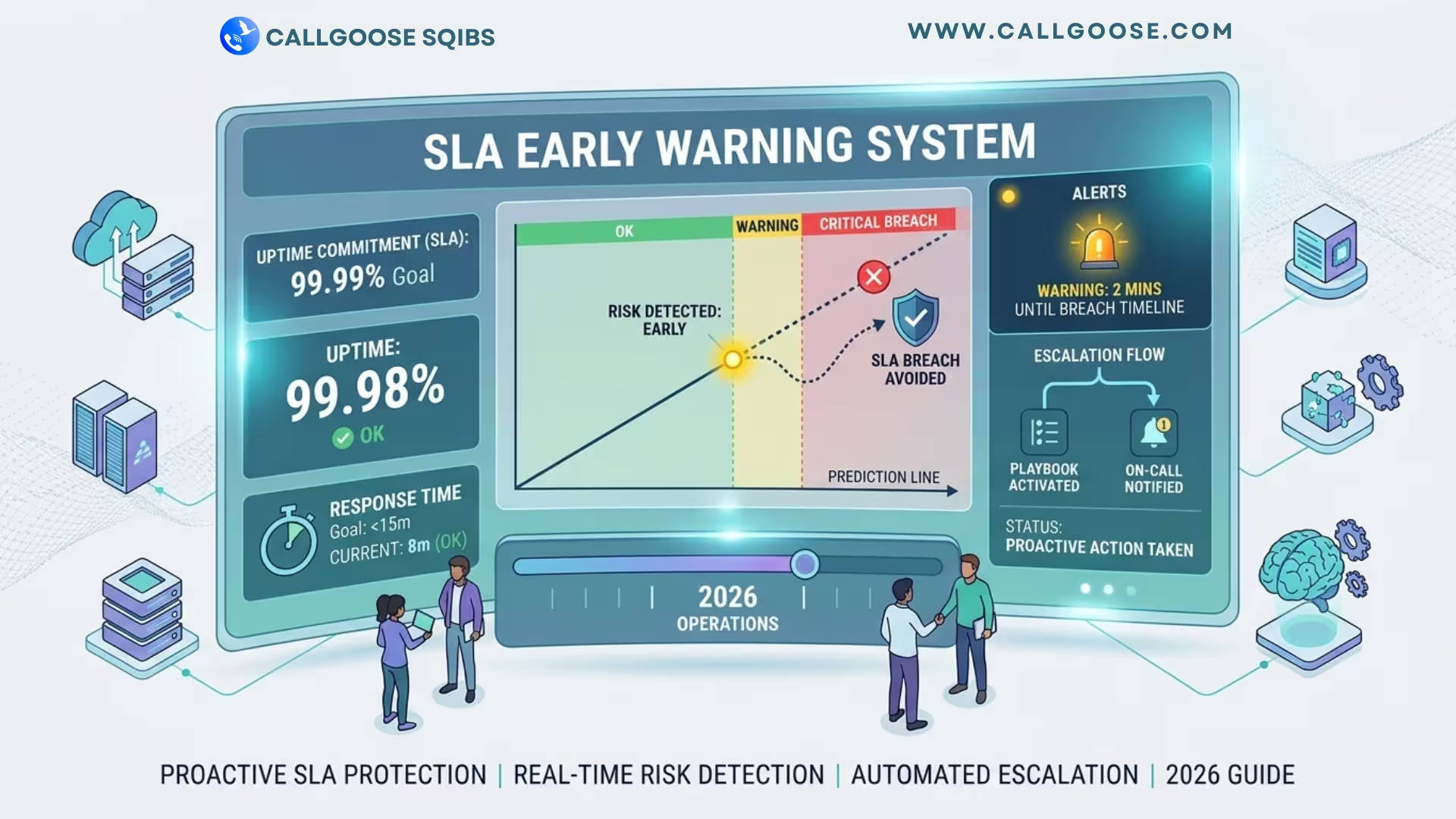
Modern SaaS operations are shifting toward proactive SLA protection, where systems identify risks before an SLA is violated. This approach relies on early warning mechanisms that detect when service reliability is approaching critical thresholds.
In 2026, leading SaaS organizations implement SLA early warning systems that provide real-time alerts, risk detection, and automated escalation workflows.
This article explains how early warning systems work and why they are essential for preventing SLA breaches.
Why SLA Breaches Often Go Undetected
Traditional SLA tracking methods often rely on manual calculations or periodic reporting. Many organizations generate SLA reports only at the end of a reporting period such as a month or quarter.
This approach introduces a major problem.
If downtime accumulates throughout the reporting period, teams may not realize they are approaching SLA limits until it is too late to take corrective action.
Common issues with traditional SLA monitoring include:
Without real-time monitoring, SLA management becomes reactive rather than proactive.
What Is an SLA Early Warning System?
An SLA early warning system continuously monitors service reliability metrics and alerts teams when SLA commitments are at risk.
Instead of waiting for a breach to occur, the system provides advance notifications when reliability metrics approach critical thresholds.
These systems typically monitor:
When predefined thresholds are reached, alerts are triggered so that operations teams can take corrective action before the SLA is violated.
This proactive approach allows organizations to maintain stronger control over service reliability.
SLA Reminder Thresholds
One of the most effective mechanisms for early SLA risk detection is the use of SLA reminder thresholds.
An SLA reminder threshold defines a percentage of the SLA limit at which the system should trigger an early warning notification.
For example, if a service has an SLA commitment of 99.9% uptime, the system may trigger reminder alerts when the downtime consumption reaches certain percentages.
Typical reminder thresholds might include:
These alerts allow engineering teams to closely monitor service performance and prioritize incident resolution.
Reminder thresholds transform SLA tracking into a proactive operational process rather than a retrospective reporting exercise.
SLA Risk Alerts
When SLA reminder thresholds are reached, the system generates SLA risk alerts.
These alerts notify operations teams that ongoing incidents or accumulated downtime could lead to a future SLA breach.
A typical SLA risk alert might include information such as:
These alerts allow teams to immediately evaluate the situation and determine whether additional action is required.
In many cases, early alerts allow organizations to resolve incidents before the SLA is violated.
Incident Escalation During SLA Risk
Once an SLA risk is detected, incident escalation workflows play an important role in preventing breaches.
Escalation workflows ensure that critical reliability risks receive immediate attention from the appropriate teams.
Escalation policies may include:
By automating escalation processes, organizations ensure that reliability risks are addressed quickly.
This reduces the likelihood of prolonged incidents that could exceed SLA limits.
Connecting SLA Monitoring with Incident Response
Effective SLA protection requires strong coordination between SLA monitoring and incident response systems.
When an incident occurs, the system should automatically evaluate how the incident affects SLA commitments.
This allows operations teams to prioritize incidents based on their potential business impact.
For example:
Real-time visibility into SLA impact allows teams to allocate resources more effectively during incident response.
Supporting Operational Accountability
Early warning systems also improve operational accountability within engineering teams.
When teams receive early alerts about SLA risks, they gain clear visibility into how ongoing incidents affect service commitments.
This transparency encourages:
Organizations that implement structured SLA monitoring often achieve lower Mean Time to Resolve (MTTR) because teams prioritize incidents that pose the greatest reliability risk.
The Role of Reliability Monitoring
Modern reliability platforms integrate multiple capabilities to support SLA protection.
These platforms combine:
Industry guidance from the Uptime Institute highlights the importance of proactive monitoring for maintaining service reliability in complex digital infrastructures.
Organizations that invest in early detection systems are better equipped to maintain consistent uptime and operational stability.
Implementing SLA Early Warning Systems with Callgoose SQIBS
Platforms such as Callgoose SQIBS implement SLA early warning mechanisms through configurable SLA reminder thresholds.
The platform allows administrators to define:
When the system detects that the configured reminder percentage has been reached, it automatically notifies the defined escalation team.
Example alert titles may include:
These alerts provide operations teams with early visibility into reliability risks, allowing them to act before SLA commitments are violated.
Callgoose SQIBS integrates SLA monitoring with incident response automation, enabling organizations to maintain both operational discipline and service reliability.
The platform supports both SaaS deployment and self-hosted environments, allowing organizations to implement reliability monitoring according to their infrastructure and compliance requirements.
Final Thoughts
SLA breaches can have serious operational and financial consequences for SaaS organizations. Traditional SLA reporting methods often detect breaches too late to take corrective action.
Early warning systems provide a proactive approach by continuously monitoring reliability metrics and alerting teams when SLA commitments are at risk.
Key capabilities of an effective SLA early warning system include:
By implementing these mechanisms, organizations can detect reliability risks early and maintain stronger control over their SLA commitments.
In 2026, successful SaaS platforms treat SLA monitoring not just as a reporting function, but as a proactive early warning system that protects service reliability and customer trust.
🔗 Get Started with Callgoose SQIBS: Try Now
If you're managing critical IT systems or have customer-facing platforms, Callgoose SQIBS is a game-changer! 💡 It’s designed to quickly fix issues, reduce downtime, and boost your support team’s productivity.
Callgoose SQIBS is a cutting-edge automation platform designed to elevate your organization's resilience, reliability, and operational efficiency. With powerful On-Call scheduling, real-time Incident Management, SLA Tracker and Incident Response capabilities, it ensures your systems are always on and responsive. Whether you need Process Automation, Runbook Automation, Incident Auto-remediation, IT request automation, or Event-Driven Automation and Self-service portal, Callgoose SQIBS empowers you with comprehensive solutions. Stay connected and in control with notifications via Mobile App (Android, iPhone), Email, SMS, Phone Calls in over 30+ languages across 200+ countries, and seamless integrations with Slack & Microsoft Teams. Empower your team to Trigger, Acknowledge, Resolve Incidents and Run Automation Workflow directly from Slack & Microsoft Teams.
Check out these videos to see how it works:
• Watch our quick 30-second video : Watch Here
• What is Callgoose SQIBS? : Watch Here
• Process Automation : Watch Here
• Runbook Automation : Watch Here
• Self-Service Portal : Watch Here
• SLA Tracker : Watch Here
Additionally, here is a helpful blog post on
• why businesses choose Callgoose SQIBS: Why Business Need to Choose Callgoose SQIBS
• Transforming Business Operations with Callgoose SQIBS - Incident Management & Automation Platform
• How Callgoose SQIBS Automation Platform Enhances Efficiency
• Use Cases Industry Sector-wise
• Solutions – By Functionality
Ready to Transform Your Incident Response?
See Callgoose SQIBS in action by exploring our website visit www.callgoose.com, or book a demo to discover how Callgoose SQIBS can optimize your workflows and boost your team’s productivity.
Let’s Talk! Reach out to us today to learn more or get personalized support.
Take the next step toward seamless automation and efficiency. We’re here to assist you every step of the way.
Take Control of Incidents – Anytime, Anywhere!
Looking forward to connecting with you!

CALLGOOSE
SQIBS
Advanced Automation-first platform with effective On-Call scheduling, real-time Incident Management, Incident Response, and SLA tracking capabilities that keep your organization more resilient, reliable, and always on.
Callgoose SQIBS can integrate with any applications or tools you use, including monitoring, ticketing, ITSM, log management, error tracking, ChatOps, collaboration tools, or any custom applications.
In addition to alerting and response, Callgoose SQIBS enables Automated Incident Remediation, SLA tracking (MTTA, MTTR, uptime), and Incident Response Threshold monitoring, allowing teams to proactively detect risks, prevent SLA breaches, and execute remediation workflows in real time.
A built-in self-service portal empowers end users to handle routine requests independently, significantly reducing operational load on engineering and IT teams.
Callgoose provides enterprise-grade automation, SLA governance, and incident response capabilities at one of the most cost-effective price points in the market.
Unique Features