
CALLGOOSE
CALLGOOSE
BLOG
20 March 2026 | Sophia Mark
5 Minute Read
Introduction
Reliability has become one of the most important competitive factors for SaaS companies. Customers expect cloud platforms to be continuously available, responsive, and resilient to failures. Even short service interruptions can impact customer operations, revenue generation, and brand reputation.
As SaaS systems become more distributed and infrastructure complexity increases, maintaining reliability requires more than just monitoring servers or responding to alerts.
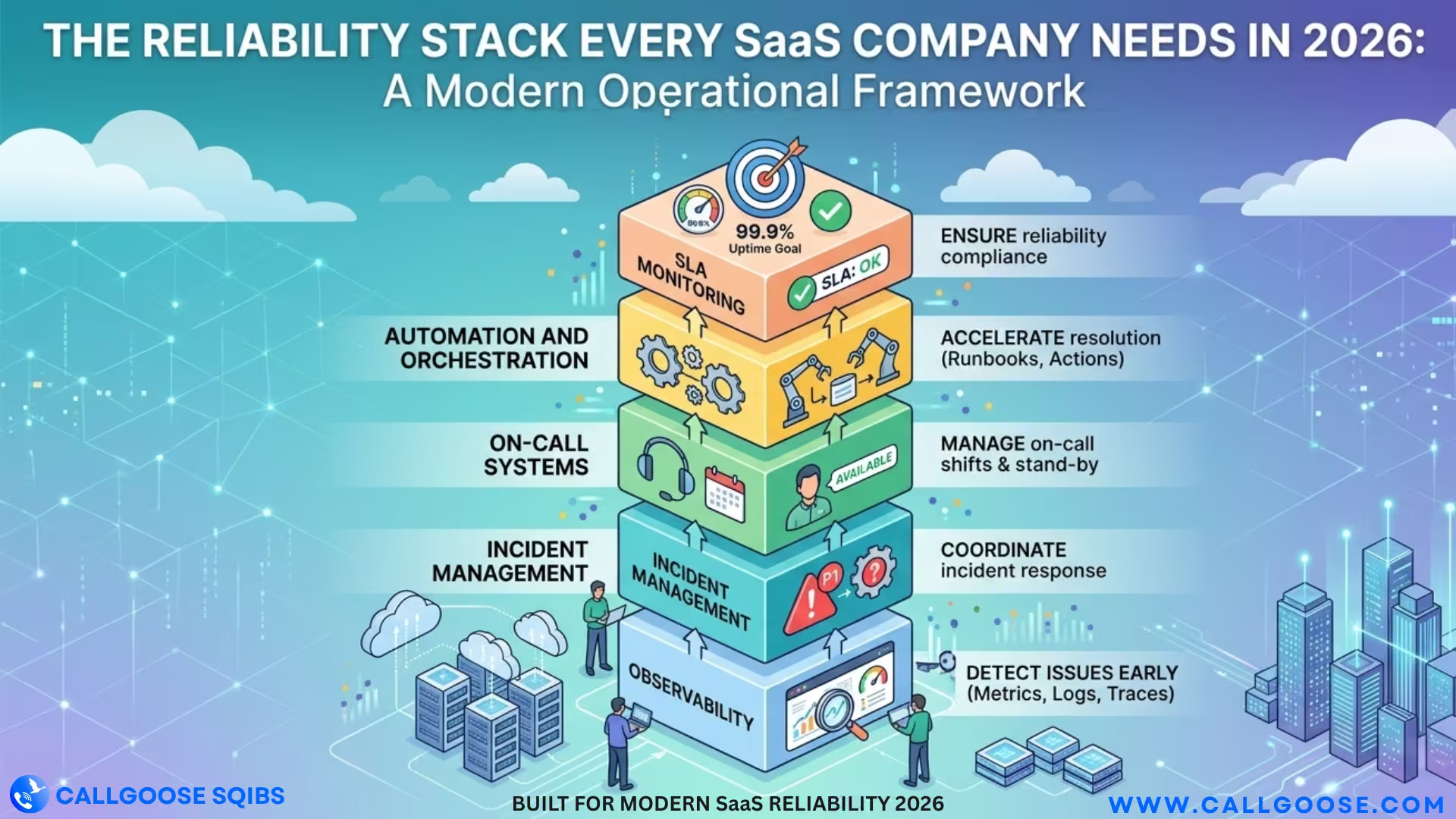
Modern SaaS organizations now rely on a Reliability Stack, a combination of operational tools and processes designed to detect issues early, coordinate incident response, and maintain service performance.
In 2026, high-performing SaaS companies typically build reliability stacks that include the following core components:
Together, these components create a structured operational framework that reduces downtime, accelerates incident resolution, and improves service accountability.
Why Reliability Stacks Are Essential for SaaS Platforms
Modern SaaS applications are rarely simple monolithic systems. Most platforms now rely on:
Each of these components introduces potential failure points.
Industry research from the Uptime Institute consistently shows that outages often result from complex interactions between multiple systems, rather than a single failure.
Because of this complexity, organizations must implement layered reliability practices that detect problems early and coordinate response efforts effectively.
This layered approach is what defines a modern Reliability Stack.
1. Observability: Understanding System Behavior
Observability forms the foundation of any reliability stack.
Observability tools collect and analyze operational data from across infrastructure and applications.
Typical observability data includes:
These insights allow engineering teams to answer key operational questions such as:
Observability platforms allow teams to detect anomalies before they escalate into full incidents.
Many SaaS organizations use observability systems to establish service health baselines, making it easier to detect abnormal behavior early.
2. Incident Management: Coordinating Response
While observability tools detect problems, incident management systems coordinate the response.
Incident management platforms help organizations:
During major incidents, clear coordination is critical.
Without structured incident management, teams often struggle with:
Incident management platforms centralize all operational activity related to an outage, ensuring that responders have a shared understanding of the situation.
3. On-Call Systems: Ensuring Immediate Response
An important part of incident response is ensuring that the right people are notified when issues occur.
On-call systems manage alert routing and ensure that incidents reach the appropriate responders.
Typical capabilities include:
When an alert occurs, the system automatically notifies the on-call engineer responsible for the affected service.
If the alert is not acknowledged within a defined timeframe, escalation policies notify additional responders.
This structured approach ensures that incidents are addressed quickly and reduces the risk of delayed response.
4. Automation and Orchestration
Modern SaaS environments increasingly rely on automation to reduce operational overhead and improve response speed.
Automation systems can execute predefined workflows when specific events occur.
Examples include:
Automation reduces the amount of manual intervention required during incidents and allows teams to resolve issues faster.
It also helps standardize operational procedures, ensuring that responses follow consistent workflows.
5. SLA Monitoring: Protecting Service Commitments
While observability and incident management focus on operational events, SLA monitoring focuses on service commitments.
Service Level Agreements define the reliability expectations that SaaS providers promise to customers.
Common SLA metrics include:
SLA monitoring systems track these metrics in real time and alert teams when reliability commitments are at risk.
This allows organizations to:
Automated SLA tracking also eliminates manual downtime calculations and provides consistent compliance reporting.
How Modern Reliability Stacks Work Together
Each layer of the reliability stack performs a specific function, but their real value comes from working together.
A typical operational workflow may look like this:
By integrating these capabilities, organizations can significantly reduce Mean Time to Acknowledge (MTTA) and Mean Time to Resolve (MTTR).
Lower MTTA and MTTR directly improve service reliability and customer satisfaction.
Reducing Coordination Overhead
One of the biggest challenges during incidents is coordination overhead.
When multiple teams are involved in troubleshooting, communication can become chaotic.
Common coordination problems include:
Reliability stacks address this problem by providing centralized tools that organize incident response workflows.
This structured approach ensures that every responder understands their role and has access to the same operational information.
Implementing a Modern Reliability Stack with Callgoose SQIBS
Platforms like Callgoose SQIBS bring several layers of the reliability stack together into a unified operational platform.
Callgoose SQIBS provides capabilities such as:
By combining incident management with SLA tracking and automation capabilities, organizations can manage reliability from a single operational platform.
Callgoose SQIBS is available as both SaaS and self-hosted deployments, allowing organizations to implement reliability operations based on their infrastructure preferences and compliance requirements.
Final Thoughts
In 2026, maintaining reliable SaaS services requires more than simply reacting to alerts. Organizations must build structured reliability systems that detect problems early and coordinate response effectively.
A modern reliability stack typically includes:
Together, these components allow SaaS companies to reduce downtime, improve incident response speed, and maintain strong reliability commitments to customers.
As SaaS platforms continue to grow in complexity, organizations that invest in robust reliability stacks will be better equipped to maintain service stability, protect customer trust, and scale their operations successfully.
🔗 Get Started with Callgoose SQIBS: Try Now
If you're managing critical IT systems or have customer-facing platforms, Callgoose SQIBS is a game-changer! 💡 It’s designed to quickly fix issues, reduce downtime, and boost your support team’s productivity.
Callgoose SQIBS is a cutting-edge automation platform designed to elevate your organization's resilience, reliability, and operational efficiency. With powerful On-Call scheduling, real-time Incident Management, SLA Tracker and Incident Response capabilities, it ensures your systems are always on and responsive. Whether you need Process Automation, Runbook Automation, Incident Auto-remediation, IT request automation, or Event-Driven Automation and Self-service portal, Callgoose SQIBS empowers you with comprehensive solutions. Stay connected and in control with notifications via Mobile App (Android, iPhone), Email, SMS, Phone Calls in over 30+ languages across 200+ countries, and seamless integrations with Slack & Microsoft Teams. Empower your team to Trigger, Acknowledge, Resolve Incidents and Run Automation Workflow directly from Slack & Microsoft Teams.
Check out these videos to see how it works:
• Watch our quick 30-second video : Watch Here
• What is Callgoose SQIBS? : Watch Here
• Process Automation : Watch Here
• Runbook Automation : Watch Here
• Self-Service Portal : Watch Here
• SLA Tracker : Watch Here
Additionally, here is a helpful blog post on
• why businesses choose Callgoose SQIBS: Why Business Need to Choose Callgoose SQIBS
• Transforming Business Operations with Callgoose SQIBS - Incident Management & Automation Platform
• How Callgoose SQIBS Automation Platform Enhances Efficiency
• Use Cases Industry Sector-wise
• Solutions – By Functionality
Ready to Transform Your Incident Response?
See Callgoose SQIBS in action by exploring our website visit www.callgoose.com, or book a demo to discover how Callgoose SQIBS can optimize your workflows and boost your team’s productivity.
Let’s Talk! Reach out to us today to learn more or get personalized support.
Take the next step toward seamless automation and efficiency. We’re here to assist you every step of the way.
Take Control of Incidents – Anytime, Anywhere!
Looking forward to connecting with you!
BLOG
5m Read
BLOG
5m Read
BLOG
5m Read
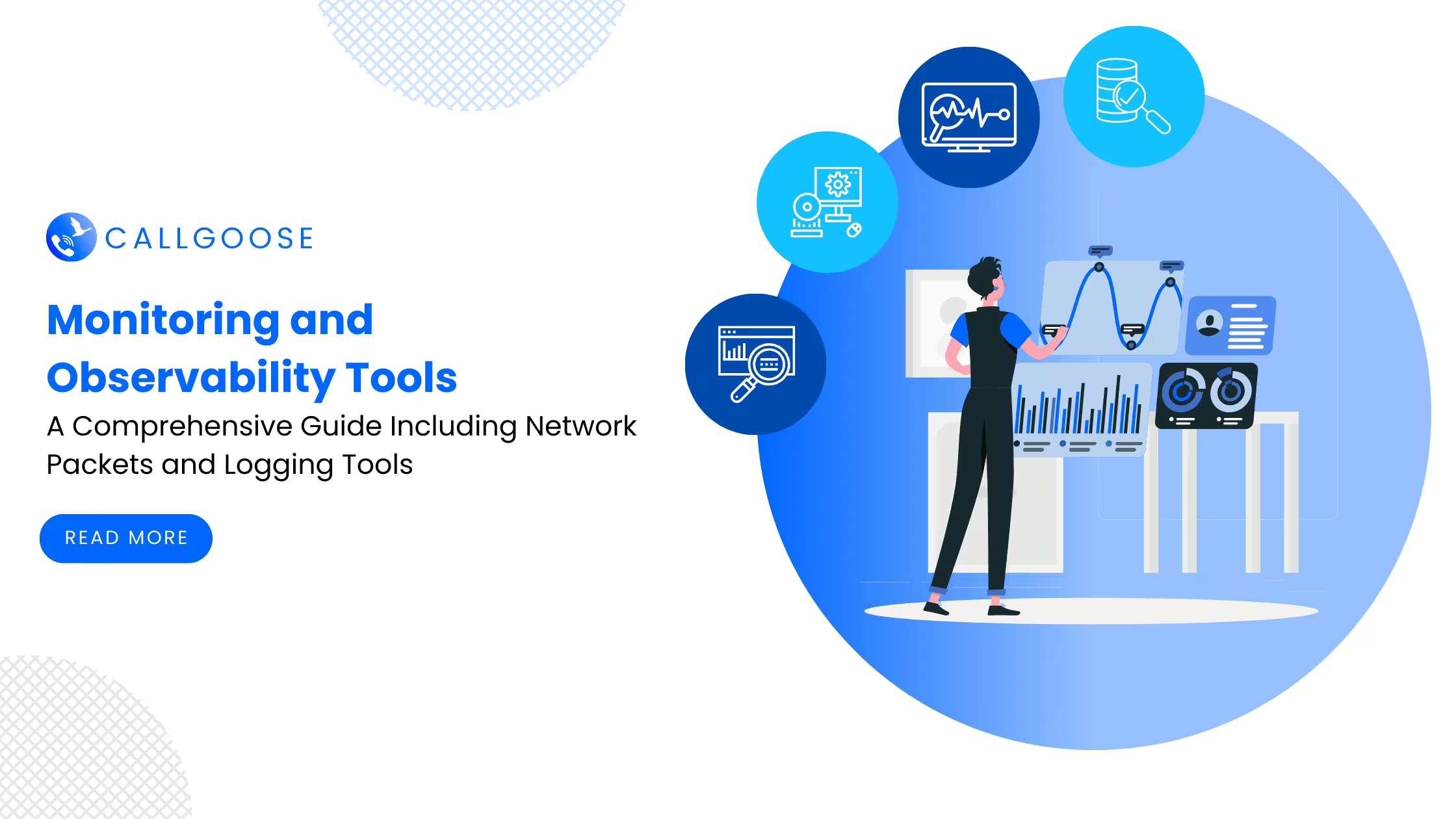
Monitoring and Observability Tools: A Comprehensive Guide Including Network Packets and Logging Tools
06 December 2024
|
Amelia Gaby
As IT systems become more complex, organizations require robust monitoring and observability tools to ensure reliability and performance. From tracking network packets to monitoring logs across distri...

CALLGOOSE
SQIBS
Advanced Automation-first platform with effective On-Call scheduling, real-time Incident Management, Incident Response, and SLA tracking capabilities that keep your organization more resilient, reliable, and always on.
Callgoose SQIBS can integrate with any applications or tools you use, including monitoring, ticketing, ITSM, log management, error tracking, ChatOps, collaboration tools, or any custom applications.
In addition to alerting and response, Callgoose SQIBS enables Automated Incident Remediation, SLA tracking (MTTA, MTTR, uptime), and Incident Response Threshold monitoring, allowing teams to proactively detect risks, prevent SLA breaches, and execute remediation workflows in real time.
A built-in self-service portal empowers end users to handle routine requests independently, significantly reducing operational load on engineering and IT teams.
Callgoose provides enterprise-grade automation, SLA governance, and incident response capabilities at one of the most cost-effective price points in the market.
Unique Features