
CALLGOOSE
CALLGOOSE
BLOG
10 August 2026 | Sophia Mark
5 Minute Read
Introduction
As organizations expand their IT infrastructure and business applications, the number of operational events they manage continues to grow. Infrastructure alerts, application issues, integration failures, and service disruptions can all occur simultaneously, making it increasingly difficult for operations teams to maintain visibility and respond efficiently.
When every incident is managed in isolation or grouped together without context, identifying ownership, understanding the impact, and coordinating responses becomes significantly more challenging. Organizing incidents effectively is no longer just an operational preference it's an essential part of modern incident management.
The Challenge of Managing Incidents at Scale
Many organizations support dozens or even hundreds of business and technical services. Each service may have its own operational priorities, support teams, escalation procedures, maintenance schedules, and integrations.
Without a structured way to organize incidents, operations teams can spend valuable time determining which team owns an issue, which escalation policy should apply, or how a particular incident should be managed. As the operational environment grows, this complexity can slow response times and reduce overall operational efficiency.
A structured approach to organizing incidents helps ensure that operational processes remain consistent regardless of the number of services an organization manages.
Why Service-Based Organization Matters
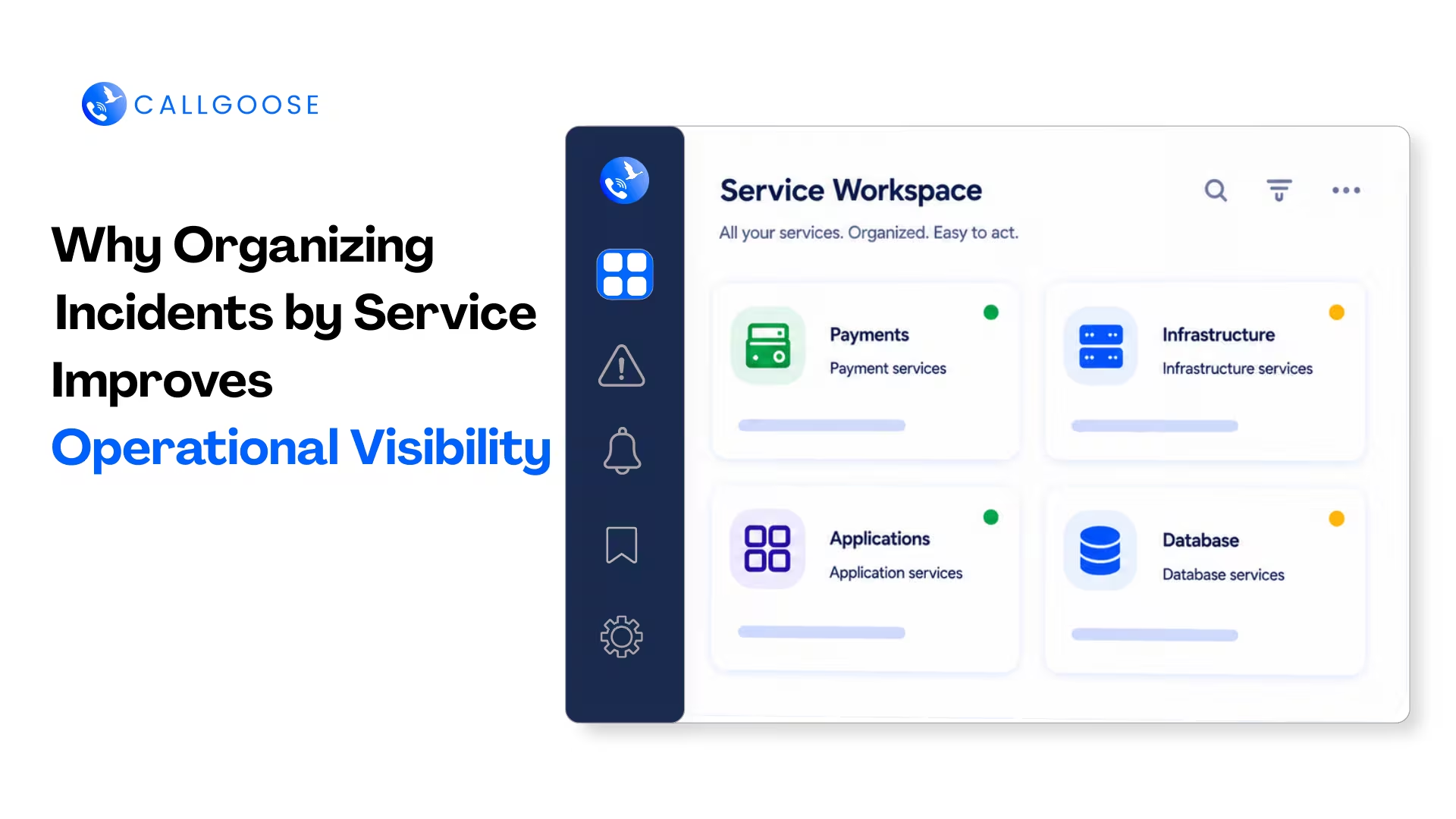
Organizing incidents by service provides important operational context from the moment an incident is created. Instead of treating every incident the same way, organizations can associate incidents with the service they affect, allowing operational workflows to be managed more consistently.
This approach also makes it easier to manage service-specific operational settings while keeping related incidents organized within the appropriate business or technical service.
As organizations continue to grow, service-based organization supports better operational visibility without increasing administrative complexity.
Building More Consistent Incident Management
Consistency is one of the foundations of effective incident response. When incidents associated with a particular service follow the same operational process, teams can respond more efficiently and maintain standardized operational practices.
Rather than configuring operational settings individually for every incident, organizations benefit from managing service-level configurations that can be applied consistently whenever incidents are associated with that service.
This structured approach helps reduce manual effort while supporting more predictable operational workflows.
How Callgoose SQIBS Helps
Callgoose SQIBS uses Services as a core part of incident management. Every incident is associated with a Service, providing a structured way to organize operational activities.
Each Service can be configured with its own operational settings, including Escalation Policies, Integrations, Maintenance, and Maintenance Tags. Managing these settings at the service level allows organizations to maintain consistent operational processes while supporting the unique requirements of different services.
As operational environments evolve, Services can also be updated or managed independently, providing the flexibility needed to support changing business and technical requirements.
Supporting Scalable Operations
Operational growth often introduces new applications, platforms, and business services. As the number of supported services increases, maintaining clear organization becomes increasingly important.
A service-based approach allows organizations to continue expanding their operational environment while preserving visibility and consistency across incident management activities. Instead of creating disconnected operational processes for different systems, teams can manage incidents within a structured and centralized framework.
This scalability helps organizations support long-term operational growth without sacrificing efficiency or control.
Conclusion
Modern incident management is about more than responding to alerts it's about organizing operational activities in a way that supports efficiency, consistency, and long-term scalability.
By associating every incident with a Service and enabling service-level operational configuration, Callgoose SQIBS helps organizations build a more structured approach to incident management. As operational environments continue to evolve, organizing incidents by Service provides the visibility and consistency needed to support faster, more effective operational response.
🔗 Get Started with Callgoose SQIBS: Try Now
If you’re managing critical IT systems or have customer-facing platforms, Callgoose SQIBS is a game-changer! 💡 It’s designed to quickly fix issues, reduce downtime, and boost your support team’s productivity.
Callgoose SQIBS is a cutting-edge automation platform designed to elevate your organization’s resilience, reliability, and operational efficiency. With powerful On-Call scheduling, real-time Incident Management, SLA Tracker and Incident Response capabilities, it ensures your systems are always on and responsive. Whether you need Process Automation, Runbook Automation, Incident Auto-remediation, IT request automation, or Event-Driven Automation and Self-service portal, Callgoose SQIBS empowers you with comprehensive solutions. Stay connected and in control with notifications via Mobile App (Android, iPhone), Email, SMS, Phone Calls in over 30+ languages across 200+ countries, and seamless integrations with Slack & Microsoft Teams. Empower your team to Trigger, Acknowledge, Resolve Incidents and Run Automation Workflow directly from Slack & Microsoft Teams.
Check out these videos to see how it works:
• Watch our quick 30-second video : Watch Here
• What is Callgoose SQIBS? : Watch Here
• Process Automation : Watch Here
• Runbook Automation : Watch Here
• Self-Service Portal : Watch Here
• SLA Tracker : Watch Here
Additionally, here is a helpful blog post on
• why businesses choose Callgoose SQIBS: Why Business Need to Choose Callgoose SQIBS
• Transforming Business Operations with Callgoose SQIBS — Incident Management & Automation Platform
• How Callgoose SQIBS Automation Platform Enhances Efficiency
• Use Cases Industry Sector-wise
• Solutions — By Functionality
Ready to Transform Your Incident Response?
See Callgoose SQIBS in action by exploring our website visit www.callgoose.com, or book a demo to discover how Callgoose SQIBS can optimize your workflows and boost your team’s productivity.
Let’s Talk! Reach out to us today to learn more or get personalized support.
Take the next step toward seamless automation and efficiency. We’re here to assist you every step of the way.
Take Control of Incidents — Anytime, Anywhere!
Looking forward to connecting with you!

BLOG
5m Read

CALLGOOSE
SQIBS
Advanced Automation-first platform with effective On-Call scheduling, real-time Incident Management, Incident Response, and SLA tracking capabilities that keep your organization more resilient, reliable, and always on.
Callgoose SQIBS can integrate with any applications or tools you use, including monitoring, ticketing, ITSM, log management, error tracking, ChatOps, collaboration tools, or any custom applications.
In addition to alerting and response, Callgoose SQIBS enables Automated Incident Remediation, SLA tracking (MTTA, MTTR, uptime), and Incident Response Threshold monitoring, allowing teams to proactively detect risks, prevent SLA breaches, and execute remediation workflows in real time.
A built-in self-service portal empowers end users to handle routine requests independently, significantly reducing operational load on engineering and IT teams.
Callgoose provides enterprise-grade automation, SLA governance, and incident response capabilities at one of the most cost-effective price points in the market.
Unique Features