
CALLGOOSE
CALLGOOSE
BLOG
10 August 2026 | Sophia Mark
5 Minute Read
Introduction
Modern IT and business operations rely on a wide range of systems to generate operational events. Monitoring platforms detect infrastructure issues, cloud services report service disruptions, business applications generate alerts, and custom applications produce events that require immediate attention. While these systems are essential for day-to-day operations, their ability to communicate effectively with an incident management platform is equally important.
The challenge isn't simply receiving alerts it's ensuring they reach the right operational workflow quickly, reliably, and in a way that fits the organization's existing technology landscape. Choosing the right integration method plays a significant role in achieving that goal.

Why Integration Strategy Matters
Every organization has a unique technology environment. A modern monitoring platform may support REST APIs or webhooks for real-time event delivery, while a legacy application may only generate email alerts. Replacing existing systems simply because they support a different integration method is rarely practical.
Instead, organizations benefit from an incident management platform that supports multiple integration options, allowing existing systems to connect without significant changes to their operational environment. This flexibility enables both modern and legacy systems to participate in the same incident response workflow while protecting existing technology investments.
A flexible integration strategy also enables organizations to modernize incident response gradually while continuing to leverage their current monitoring and operational tools.
Understanding Different Integration Approaches
Different integration methods serve different operational needs.
API-based integrations are ideal when applications need to exchange structured information directly with an incident management platform. They provide a controlled and programmatic way to create incidents from external systems.
Webhook integrations enable applications to send event data automatically whenever specific activities occur. This event-driven approach allows incidents to be triggered as operational events happen.
Email integrations provide an effective option for systems capable of generating email alerts but without support for APIs or webhooks. Instead of requiring additional development effort, organizations can continue using existing email-based notifications while integrating them into their incident management workflow.
Rather than competing with one another, these integration methods complement each other, allowing organizations to choose the approach that best matches each application.
Building a Flexible Incident Response Platform
Operational environments rarely consist of a single technology stack. Infrastructure monitoring tools, cloud platforms, security solutions, business applications, and internally developed systems often coexist within the same organization.
Supporting multiple integration methods enables these diverse systems to contribute to a centralized incident response process without requiring extensive redevelopment or complex migration projects.
This flexibility allows organizations to standardize incident management while preserving existing technology investments.
How Callgoose SQIBS Helps
Callgoose SQIBS supports multiple integration methods, including API, Email, and Webhooks, allowing organizations to connect a wide variety of operational systems based on their individual capabilities.
Organizations can use API integrations for programmatic incident creation, configure webhook integrations for event-driven communication, or process email-based alerts from systems that communicate through email.
By supporting multiple integration approaches within a single platform, Callgoose SQIBS enables organizations to centralize incident creation while adapting to the requirements of different operational systems.
Supporting Scalable Operations
As organizations expand, new applications and services are continually introduced into their operational environment. A platform that supports multiple integration methods makes it easier to incorporate these systems into existing incident response workflows without redesigning operational processes.
This adaptability helps organizations maintain consistent incident management practices while accommodating future technology growth.
Conclusion
There is no single integration method that fits every operational environment. APIs, webhooks, and email integrations each address different technical requirements, and organizations often benefit from using a combination of all three.
By supporting multiple integration methods, Callgoose SQIBS enables organizations to connect diverse operational systems through a unified incident management platform. This flexibility helps teams streamline incident creation, improve operational efficiency, and build an incident response process that evolves alongside their technology landscape.
🔗 Get Started with Callgoose SQIBS: Try Now
If you’re managing critical IT systems or have customer-facing platforms, Callgoose SQIBS is a game-changer! 💡 It’s designed to quickly fix issues, reduce downtime, and boost your support team’s productivity.
Callgoose SQIBS is a cutting-edge automation platform designed to elevate your organization’s resilience, reliability, and operational efficiency. With powerful On-Call scheduling, real-time Incident Management, SLA Tracker and Incident Response capabilities, it ensures your systems are always on and responsive. Whether you need Process Automation, Runbook Automation, Incident Auto-remediation, IT request automation, or Event-Driven Automation and Self-service portal, Callgoose SQIBS empowers you with comprehensive solutions. Stay connected and in control with notifications via Mobile App (Android, iPhone), Email, SMS, Phone Calls in over 30+ languages across 200+ countries, and seamless integrations with Slack & Microsoft Teams. Empower your team to Trigger, Acknowledge, Resolve Incidents and Run Automation Workflow directly from Slack & Microsoft Teams.
Check out these videos to see how it works:
• Watch our quick 30-second video : Watch Here
• What is Callgoose SQIBS? : Watch Here
• Process Automation : Watch Here
• Runbook Automation : Watch Here
• Self-Service Portal : Watch Here
• SLA Tracker : Watch Here
Additionally, here is a helpful blog post on
• why businesses choose Callgoose SQIBS: Why Business Need to Choose Callgoose SQIBS
• Transforming Business Operations with Callgoose SQIBS — Incident Management & Automation Platform
• How Callgoose SQIBS Automation Platform Enhances Efficiency
• Use Cases Industry Sector-wise
• Solutions — By Functionality
Ready to Transform Your Incident Response?
See Callgoose SQIBS in action by exploring our website visit www.callgoose.com, or book a demo to discover how Callgoose SQIBS can optimize your workflows and boost your team’s productivity.
Let’s Talk! Reach out to us today to learn more or get personalized support.
Take the next step toward seamless automation and efficiency. We’re here to assist you every step of the way.
Take Control of Incidents — Anytime, Anywhere!
Looking forward to connecting with you!


BLOG
5m Read
BLOG
5m Read
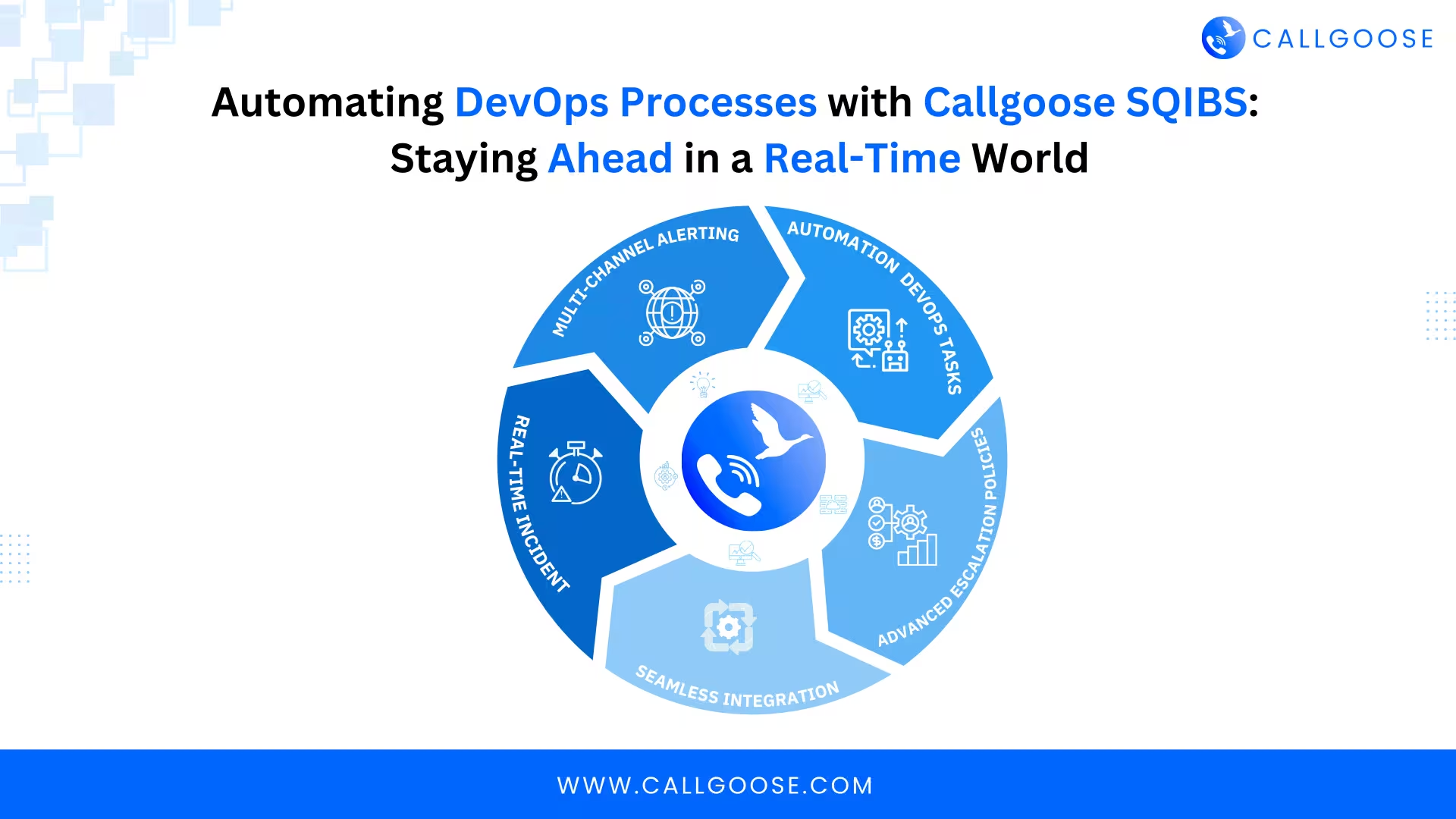
Automating DevOps Processes with Callgoose SQIBS: Staying Ahead in a Real-Time World
04 December 2024
|
William James
In today’s fast-paced digital landscape, organizations face mounting pressure to deliver mission-critical processes in real-time. To stay competitive, businesses must adopt an automation-centric strat...

CALLGOOSE
SQIBS
Advanced Automation-first platform with effective On-Call scheduling, real-time Incident Management, Incident Response, and SLA tracking capabilities that keep your organization more resilient, reliable, and always on.
Callgoose SQIBS can integrate with any applications or tools you use, including monitoring, ticketing, ITSM, log management, error tracking, ChatOps, collaboration tools, or any custom applications.
In addition to alerting and response, Callgoose SQIBS enables Automated Incident Remediation, SLA tracking (MTTA, MTTR, uptime), and Incident Response Threshold monitoring, allowing teams to proactively detect risks, prevent SLA breaches, and execute remediation workflows in real time.
A built-in self-service portal empowers end users to handle routine requests independently, significantly reducing operational load on engineering and IT teams.
Callgoose provides enterprise-grade automation, SLA governance, and incident response capabilities at one of the most cost-effective price points in the market.
Unique Features