
CALLGOOSE
CALLGOOSE
BLOG
23 March 2026 | Sophia Mark
5 Minute Read
Introduction
Modern SaaS platforms rarely operate as a single system managed by one engineering team. Instead, they are built from multiple services, managed by multiple teams, running on shared infrastructure. While this architecture allows organizations to scale development and ship features faster, it also introduces significant operational complexity.
One of the biggest challenges that emerges in this environment is SLA tracking.
When many teams contribute to the same platform, maintaining clear visibility into service reliability, incident ownership, and SLA performance becomes difficult. Without structured SLA tracking, organizations struggle to understand which services are impacting reliability and which teams are responsible for resolving incidents.
This article explains why SLA tracking becomes more complex in multi-team SaaS environments and how modern platforms solve this problem using project-based and service-level SLA monitoring.
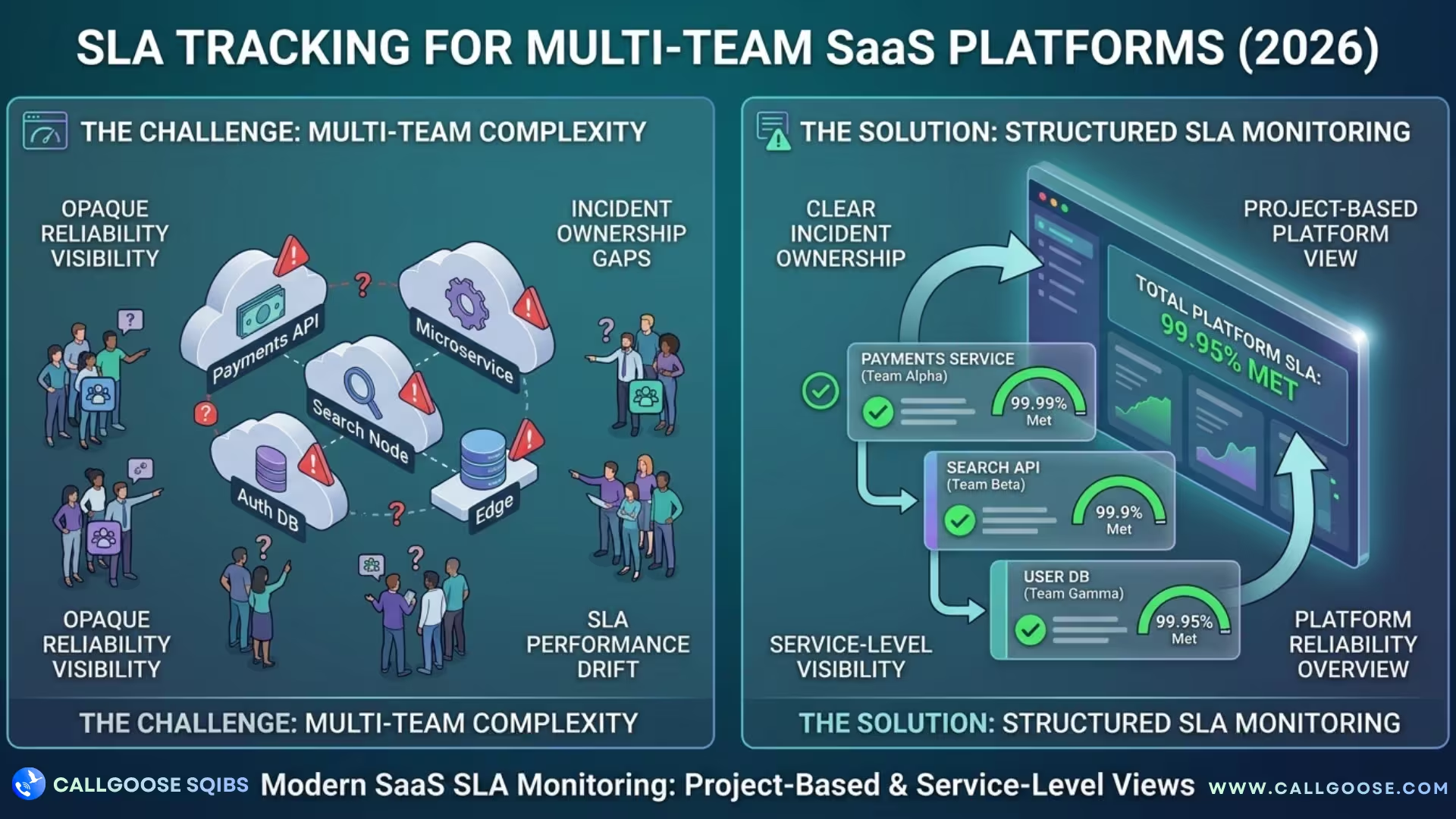
The Complexity of Multi-Team SaaS Platforms
Many SaaS platforms today follow a distributed architecture composed of:
For example, a SaaS product might include:
Each of these services may be owned by different teams with different operational responsibilities.
When an incident occurs, determining which service caused the issue and how it affects overall SLA commitments can be difficult without structured monitoring systems.
Why Traditional SLA Tracking Fails in Multi-Team Environments
Many organizations initially attempt to track SLAs using global uptime metrics or manual reporting systems.
This approach creates several operational problems.
Limited Ownership Visibility
Global SLA tracking only provides a single reliability number for the entire platform.
It does not reveal:
Without service-level visibility, teams cannot effectively improve reliability.
Lack of Service-Level Accountability
When SLA metrics are tracked globally, responsibility becomes unclear.
If an SLA breach occurs, teams may struggle to determine:
Clear ownership is essential for improving service reliability in distributed environments.
Fragmented Reliability Reporting
Another challenge arises when each team uses different tools to monitor reliability.
Inconsistent monitoring methods can lead to:
Organizations need a unified system that provides centralized reliability visibility across all services and teams.
Project-Based SLA Tracking
One solution to this challenge is project-based SLA tracking.
Project-based SLA tracking allows organizations to define reliability commitments at the product or service level.
Instead of tracking SLA metrics globally, organizations can define SLAs for specific projects such as:
Each project can have its own SLA commitments based on the criticality of the service.
For example:

This structure allows teams to track SLA performance more accurately and ensures that reliability expectations match the importance of each system.
Service-Level SLA Monitoring
Project-level monitoring is only one part of the solution.
Modern SaaS organizations also implement service-level SLA monitoring.
Service-level SLA monitoring tracks reliability metrics for individual services that contribute to the larger platform.
Examples include:
By monitoring SLAs at the service level, organizations can identify which services contribute most to downtime or performance degradation.
This granular visibility allows teams to prioritize improvements where they will have the greatest impact.
Cross-Team Reliability Visibility
Another critical capability in multi-team environments is cross-team reliability visibility.
When incidents occur, multiple teams often need to collaborate to resolve the issue.
A centralized SLA monitoring platform allows teams to see:
This shared visibility improves coordination during incidents and reduces the time required to identify root causes.
Cross-team transparency also promotes stronger operational accountability.
Managing Shared Infrastructure Risks
Many SaaS platforms rely on shared infrastructure components such as:
Failures in shared infrastructure can impact multiple services simultaneously.
Without centralized SLA tracking, it can be difficult to understand how infrastructure failures propagate across the system.
Modern SLA monitoring systems provide dashboards that show how infrastructure incidents affect multiple services and teams.
This visibility helps organizations identify systemic risks and improve platform resilience.
Operational Benefits of Multi-Team SLA Tracking
Implementing structured SLA tracking across multiple teams provides several operational advantages.
Clear Service Ownership
Each service can be linked to the responsible team, ensuring accountability during incidents.
Faster Incident Resolution
When teams know which service caused the outage, they can respond faster and reduce downtime.
Accurate SLA Reporting
Organizations can generate reliable SLA reports for individual services, projects, and the overall platform.
Improved Reliability Engineering
Granular SLA data helps engineering teams identify weak points in the system and prioritize reliability improvements.
These insights are essential for maintaining service reliability as platforms grow in complexity.
Implementing Multi-Team SLA Tracking with Callgoose SQIBS
Platforms such as Callgoose SQIBS provide architecture designed to support multi-team SaaS environments.
The platform allows organizations to structure reliability monitoring around:
This architecture enables organizations to:
Callgoose SQIBS also integrates Incident Response Threshold monitoring, allowing teams to enforce response-time expectations for incidents that affect their services.
Because the platform supports both SaaS deployment and self-hosted environments, organizations can implement SLA monitoring in ways that align with their infrastructure, security, and compliance requirements.
Final Thoughts
As SaaS platforms grow, operational complexity increases rapidly. Multiple teams, multiple services, and shared infrastructure create challenges that traditional SLA tracking methods cannot handle effectively.
To maintain strong reliability commitments, modern organizations must implement structured SLA monitoring that provides visibility across services, teams, and products.
Key practices include:
By adopting these approaches, SaaS companies can maintain accountability across teams, improve incident response coordination, and ensure that service reliability meets customer expectations.
In 2026, effective SLA tracking is not just about measuring uptime, it is about managing reliability across complex multi-team platforms.
🔗 Get Started with Callgoose SQIBS: Try Now
If you're managing critical IT systems or have customer-facing platforms, Callgoose SQIBS is a game-changer! 💡 It’s designed to quickly fix issues, reduce downtime, and boost your support team’s productivity.
Callgoose SQIBS is a cutting-edge automation platform designed to elevate your organization's resilience, reliability, and operational efficiency. With powerful On-Call scheduling, real-time Incident Management, SLA Tracker and Incident Response capabilities, it ensures your systems are always on and responsive. Whether you need Process Automation, Runbook Automation, Incident Auto-remediation, IT request automation, or Event-Driven Automation and Self-service portal, Callgoose SQIBS empowers you with comprehensive solutions. Stay connected and in control with notifications via Mobile App (Android, iPhone), Email, SMS, Phone Calls in over 30+ languages across 200+ countries, and seamless integrations with Slack & Microsoft Teams. Empower your team to Trigger, Acknowledge, Resolve Incidents and Run Automation Workflow directly from Slack & Microsoft Teams.
Check out these videos to see how it works:
• Watch our quick 30-second video : Watch Here
• What is Callgoose SQIBS? : Watch Here
• Process Automation : Watch Here
• Runbook Automation : Watch Here
• Self-Service Portal : Watch Here
• SLA Tracker : Watch Here
Additionally, here is a helpful blog post on
• why businesses choose Callgoose SQIBS: Why Business Need to Choose Callgoose SQIBS
• Transforming Business Operations with Callgoose SQIBS - Incident Management & Automation Platform
• How Callgoose SQIBS Automation Platform Enhances Efficiency
• Use Cases Industry Sector-wise
• Solutions – By Functionality
Ready to Transform Your Incident Response?
See Callgoose SQIBS in action by exploring our website visit www.callgoose.com, or book a demo to discover how Callgoose SQIBS can optimize your workflows and boost your team’s productivity.
Let’s Talk! Reach out to us today to learn more or get personalized support.
Take the next step toward seamless automation and efficiency. We’re here to assist you every step of the way.
Take Control of Incidents – Anytime, Anywhere!
Looking forward to connecting with you!
BLOG
5m Read
PagerDuty Alternatives in 2026: Why Teams Are Switching to Callgoose SQIBS
06 January 2026
|
Sophia Mark
Introduction In 2026, modern IT and DevOps teams increasingly expect end-to-end automation, flexible deployment, and predictable pricing from their incident response platforms. PagerDuty remains a cat...
BLOG
5m Read
What Is the Best PagerDuty Alternative in 2025? - Callgoose SQIBS - Automation-first incident response platform
19 December 2025
|
Sophia Mark
Introduction As operational complexity increases in 2025, many organizations are actively searching for the best PagerDuty alternative one that offers automation, affordability, and flexibility withou...

CALLGOOSE
SQIBS
Advanced Automation-first platform with effective On-Call scheduling, real-time Incident Management, Incident Response, and SLA tracking capabilities that keep your organization more resilient, reliable, and always on.
Callgoose SQIBS can integrate with any applications or tools you use, including monitoring, ticketing, ITSM, log management, error tracking, ChatOps, collaboration tools, or any custom applications.
In addition to alerting and response, Callgoose SQIBS enables Automated Incident Remediation, SLA tracking (MTTA, MTTR, uptime), and Incident Response Threshold monitoring, allowing teams to proactively detect risks, prevent SLA breaches, and execute remediation workflows in real time.
A built-in self-service portal empowers end users to handle routine requests independently, significantly reducing operational load on engineering and IT teams.
Callgoose provides enterprise-grade automation, SLA governance, and incident response capabilities at one of the most cost-effective price points in the market.
Unique Features