CALLGOOSE
CALLGOOSE
BLOG
13 March 2026 | Sophia Mark
5 Minute Read
Introduction
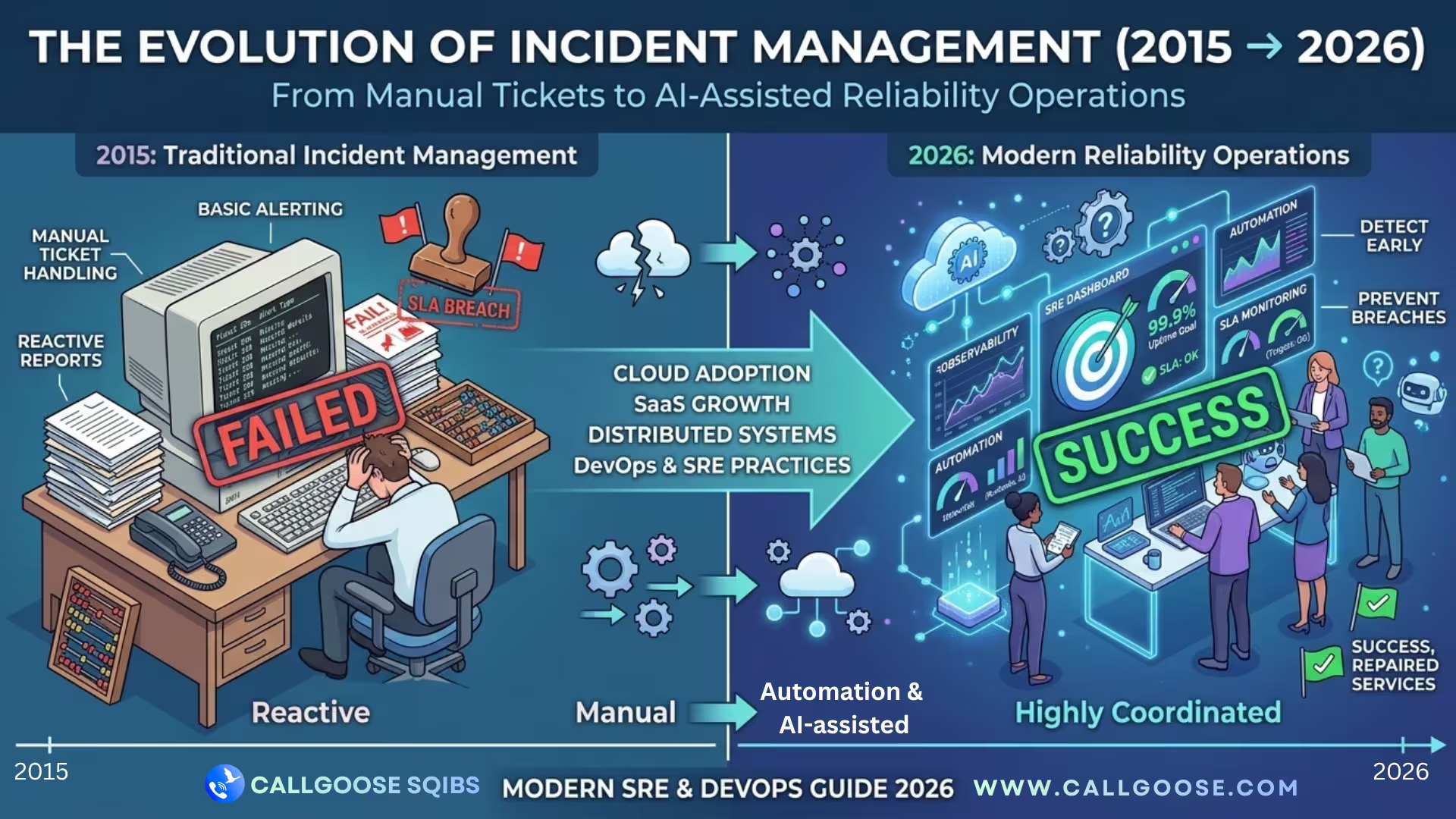
Modern SaaS platforms operate in highly distributed environments where reliability is critical. DevOps teams and Site Reliability Engineers (SREs) must continuously monitor system performance, respond to incidents quickly, and ensure services meet reliability commitments.
To achieve this, organizations rely on several operational metrics and reliability frameworks, including SLA, SLO, SLI, MTTA, and MTTR. These terms are frequently used in DevOps and reliability engineering discussions, yet they are often misunderstood or used interchangeably.
Understanding the difference between these concepts is essential for building reliable systems, defining operational expectations, and maintaining service performance standards.
This guide explains how these metrics work, how they relate to each other, and how they help organizations improve service reliability.
Why Reliability Metrics Matter in Modern SaaS Platforms
SaaS platforms today support millions of users and business-critical workflows. Even short service disruptions can affect revenue, productivity, and customer trust.
DevOps and SRE teams therefore rely on reliability metrics to:
Industry leaders such as Google SRE Team have emphasized the importance of structured reliability measurement frameworks to manage complex systems at scale.
These frameworks help teams move beyond basic uptime monitoring toward a more comprehensive reliability strategy.
What Is an SLI (Service Level Indicator)?
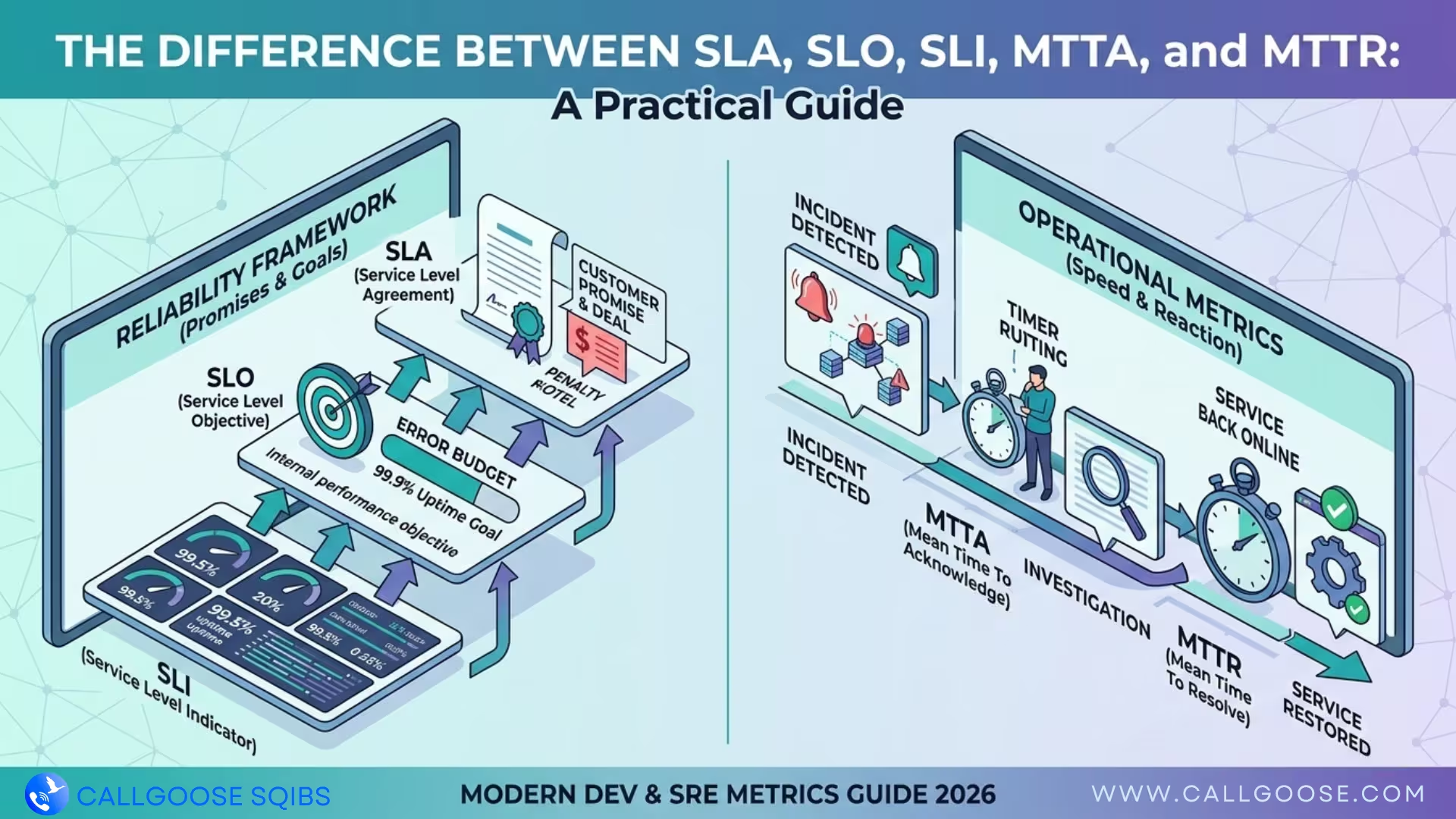
An SLI (Service Level Indicator) is a measurable metric that represents a specific aspect of service performance.
SLIs are the raw data points used to measure how well a system performs.
Common SLIs include:
For example:
SLIs provide the technical measurements that allow organizations to evaluate service reliability.
What Is an SLO (Service Level Objective)?
An SLO (Service Level Objective) defines the target value that a service should achieve for a particular SLI.
While SLIs measure system performance, SLOs define what level of performance is acceptable.
Example SLOs:
SLOs serve as internal operational targets that engineering teams aim to maintain.
They help teams prioritize reliability improvements and evaluate whether system performance is meeting expectations.
What Is an SLA (Service Level Agreement)?
An SLA (Service Level Agreement) is a formal contract between a service provider and its customers.
SLAs define the service reliability commitments that customers can expect.
An SLA typically includes:
For example:
SLAs are typically derived from SLOs, but they represent external commitments rather than internal engineering goals.
Organizations often set SLOs slightly higher than their SLA commitments to maintain a safety buffer.
Understanding the Relationship Between SLI, SLO, and SLA
These three concepts form a hierarchical reliability framework.
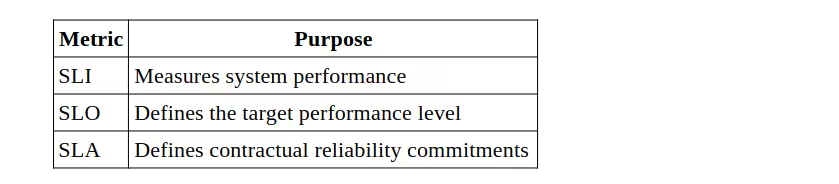
Example:
This structure ensures that operational metrics align with business commitments.
What Are MTTA and MTTR?
While SLA, SLO, and SLI focus on service performance, incident management metrics focus on how quickly teams respond when problems occur.
Two critical incident response metrics are MTTA and MTTR.
MTTA (Mean Time to Acknowledge)
MTTA measures the average time it takes for engineers to acknowledge an incident after it is detected.
A low MTTA indicates that incidents are being recognized and assigned quickly.
High MTTA values often indicate:
Fast incident acknowledgment is essential for minimizing downtime.
MTTR (Mean Time to Resolve)
MTTR measures the average time required to resolve an incident and restore service functionality.
MTTR reflects the overall efficiency of incident response and recovery processes.
Low MTTR values typically indicate:
High MTTR values often signal operational inefficiencies or complex system dependencies.
Response SLA vs Uptime SLA
Many organizations define different types of SLAs depending on the reliability metric being measured.
Two common categories are Uptime SLA and Response SLA.
Uptime SLA
An uptime SLA measures service availability over a specific period.
Typical uptime commitments include:
Downtime is calculated based on the duration of service interruptions during the measurement period.
Response SLA
A response SLA measures how quickly incidents are acknowledged and resolved.
Response SLAs often include:
Response SLAs ensure that operational teams react quickly when issues arise.
Both uptime and response SLAs play important roles in maintaining reliable services.
The Role of Incident Response Thresholds
Monitoring MTTA and MTTR alone is not enough. Organizations must also enforce response-time expectations.
Incident Response Threshold systems help achieve this by defining limits for:
When these thresholds are exceeded, automated alerts and escalation policies are triggered.
This ensures that incidents are not left unattended and that response expectations are consistently enforced across teams.
Why These Metrics Matter for DevOps and SRE Teams
For DevOps and SRE teams, reliability metrics provide a structured framework for managing complex systems.
These metrics help teams:
Organizations that actively monitor and enforce these metrics typically achieve:
Implementing Reliability Monitoring in Modern SaaS Environments
Modern incident management platforms help teams implement reliability frameworks by combining:
Platforms such as Callgoose SQIBS provide integrated capabilities for monitoring both incident response metrics and SLA compliance.
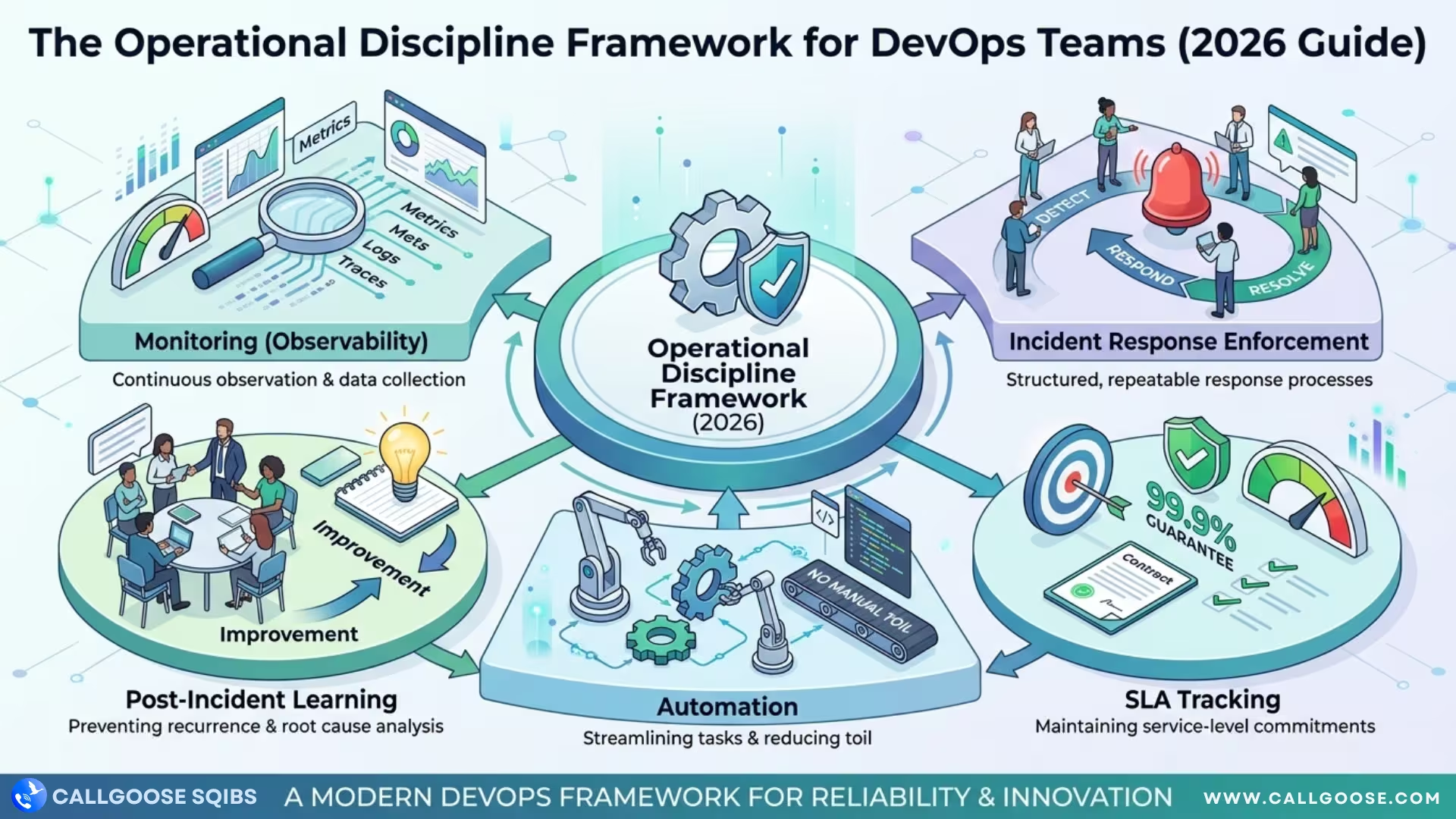
By combining incident response threshold monitoring with automated SLA tracking, organizations can maintain strong operational discipline while ensuring service commitments are met.
Callgoose SQIBS supports both SaaS deployments and self-hosted infrastructure, giving engineering teams flexibility in how they manage reliability operations.
Final Thoughts
Understanding the difference between SLA, SLO, SLI, MTTA, and MTTR is essential for building reliable modern SaaS systems.
Each metric plays a distinct role in the reliability framework:
Together, these metrics provide a comprehensive view of both service reliability and incident response performance.
For DevOps and SRE teams operating large-scale platforms in 2026, mastering these concepts is a critical step toward delivering consistent, dependable digital services.
🔗 Get Started with Callgoose SQIBS: Try Now
If you're managing critical IT systems or have customer-facing platforms, Callgoose SQIBS is a game-changer! 💡 It’s designed to quickly fix issues, reduce downtime, and boost your support team’s productivity.
Callgoose SQIBS is a cutting-edge automation platform designed to elevate your organization's resilience, reliability, and operational efficiency. With powerful On-Call scheduling, real-time Incident Management, SLA Tracker and Incident Response capabilities, it ensures your systems are always on and responsive. Whether you need Process Automation, Runbook Automation, Incident Auto-remediation, IT request automation, or Event-Driven Automation and Self-service portal, Callgoose SQIBS empowers you with comprehensive solutions. Stay connected and in control with notifications via Mobile App (Android, iPhone), Email, SMS, Phone Calls in over 30+ languages across 200+ countries, and seamless integrations with Slack & Microsoft Teams. Empower your team to Trigger, Acknowledge, Resolve Incidents and Run Automation Workflow directly from Slack & Microsoft Teams.
Check out these videos to see how it works:
• Watch our quick 30-second video : Watch Here
• What is Callgoose SQIBS? : Watch Here
• Process Automation : Watch Here
• Runbook Automation : Watch Here
• Self-Service Portal : Watch Here
• SLA Tracker : Watch Here
Additionally, here is a helpful blog post on
• why businesses choose Callgoose SQIBS: Why Business Need to Choose Callgoose SQIBS
• Transforming Business Operations with Callgoose SQIBS - Incident Management & Automation Platform
• How Callgoose SQIBS Automation Platform Enhances Efficiency
• Use Cases Industry Sector-wise
• Solutions – By Functionality
Ready to Transform Your Incident Response?
See Callgoose SQIBS in action by exploring our website visit www.callgoose.com, or book a demo to discover how Callgoose SQIBS can optimize your workflows and boost your team’s productivity.
Let’s Talk! Reach out to us today to learn more or get personalized support.
Take the next step toward seamless automation and efficiency. We’re here to assist you every step of the way.
Take Control of Incidents – Anytime, Anywhere!
Looking forward to connecting with you!

BLOG
5m Read
BLOG
5m Read

CALLGOOSE
SQIBS
Advanced Automation-first platform with effective On-Call scheduling, real-time Incident Management, Incident Response, and SLA tracking capabilities that keep your organization more resilient, reliable, and always on.
Callgoose SQIBS can integrate with any applications or tools you use, including monitoring, ticketing, ITSM, log management, error tracking, ChatOps, collaboration tools, or any custom applications.
In addition to alerting and response, Callgoose SQIBS enables Automated Incident Remediation, SLA tracking (MTTA, MTTR, uptime), and Incident Response Threshold monitoring, allowing teams to proactively detect risks, prevent SLA breaches, and execute remediation workflows in real time.
A built-in self-service portal empowers end users to handle routine requests independently, significantly reducing operational load on engineering and IT teams.
Callgoose provides enterprise-grade automation, SLA governance, and incident response capabilities at one of the most cost-effective price points in the market.
Unique Features