CALLGOOSE
CALLGOOSE
BLOG
19 March 2026 | Sophia Mark
5 Minute Read
Introduction
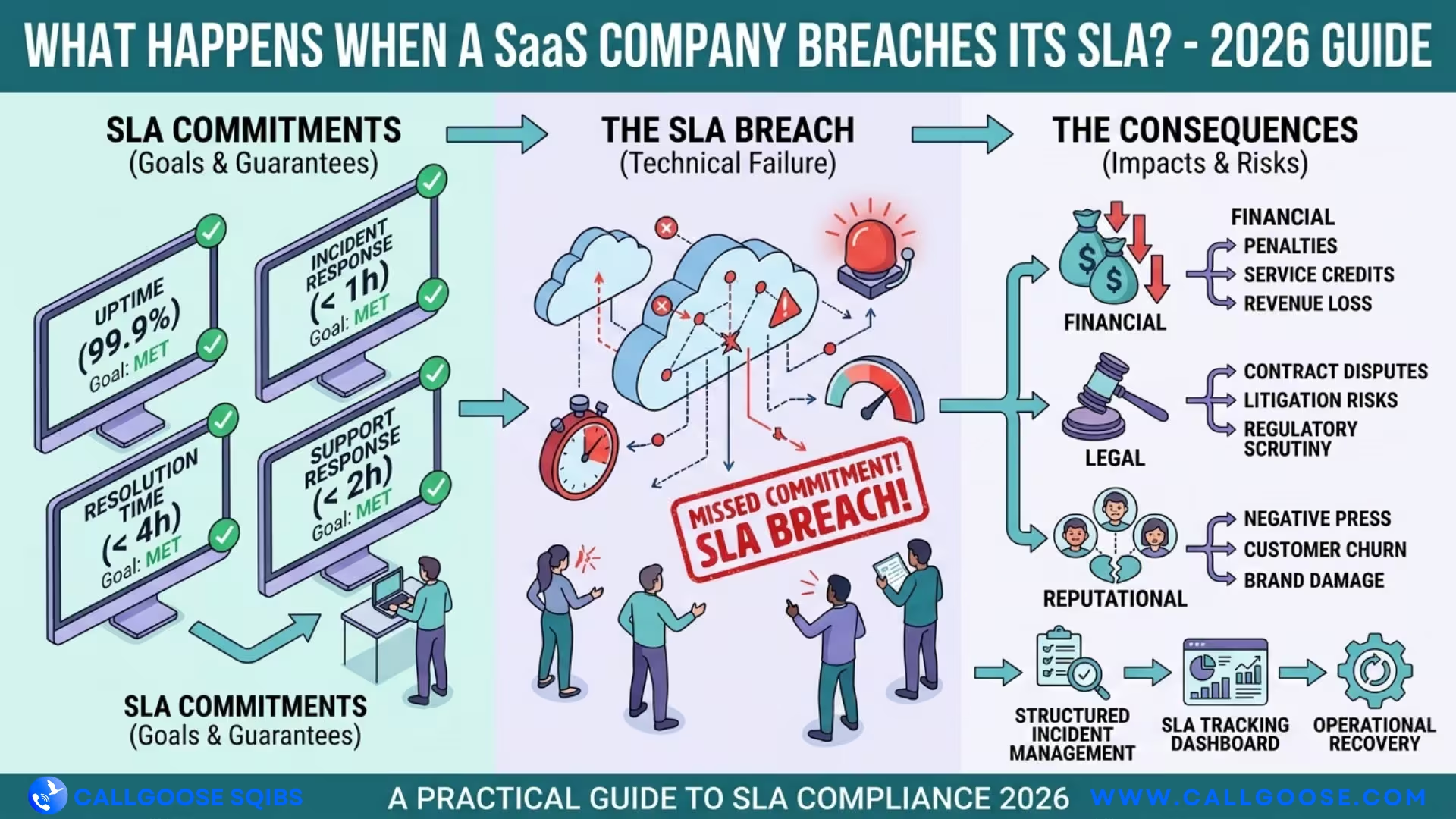
Service Level Agreements (SLAs) are a core part of modern SaaS operations. They define the performance and availability commitments that a service provider guarantees to its customers.
Typical SLA commitments include:
When a SaaS provider fails to meet these commitments, it results in an SLA breach.
An SLA breach is not just a technical failure, it can have financial, legal, and reputational consequences for the organization.
In this article, we explore what actually happens when a SaaS company breaches its SLA, how it impacts customers and providers, and why structured incident management and SLA tracking are essential in modern service operations.
Understanding SLA Breaches in SaaS
An SLA breach occurs when a service fails to meet the defined performance metrics outlined in the service agreement.
Common SLA breach scenarios include:
Many SaaS platforms promise uptime levels such as 99.9%, 99.95%, or 99.99% availability. While these numbers appear similar, the allowed downtime differs significantly.
For example:
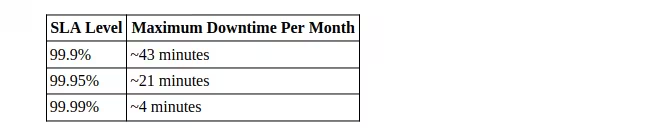
If downtime exceeds these limits, the SLA is considered breached.
Industry research from the Uptime Institute indicates that service outages continue to be a major operational risk for cloud platforms and digital services.
The Immediate Customer Impact
The first and most visible consequence of an SLA breach is customer impact.
Customers depend on SaaS platforms to run critical parts of their business. When services become unavailable or unstable, the effects can be significant.
Examples of customer impact include:
For example, if a SaaS platform that manages payment processing experiences a prolonged outage, businesses relying on that platform may temporarily lose the ability to process transactions.
Even short outages can create cascading effects across customer systems.
This is why reliability has become a key differentiator among SaaS providers.
Service Credits and Financial Compensation
Many SaaS agreements include service credit policies that compensate customers when SLAs are breached.
Service credits typically work as follows:
A typical service credit model may look like this:
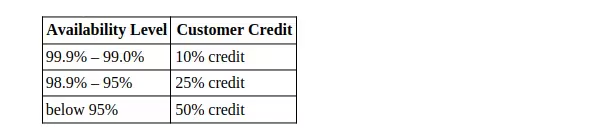
These credits are designed to compensate customers for the disruption they experienced.
However, service credits rarely cover the full financial impact that customers may suffer during outages.
For SaaS providers, repeated SLA breaches can result in significant financial exposure if large numbers of customers claim credits simultaneously.
Contractual and Legal Implications
SLAs are not just operational guidelines, they are contractual obligations.
When service commitments are not met, customers may invoke contractual rights depending on the terms of the agreement.
Potential legal consequences may include:
For enterprise SaaS providers serving industries such as finance or healthcare, SLA breaches may also raise compliance concerns.
Organizations must therefore maintain clear documentation of incidents, response actions, and resolution timelines.
This documentation is often necessary to demonstrate that the provider handled the situation responsibly.
Reputation and Customer Trust
Beyond financial and legal impacts, SLA breaches can damage customer trust.
Reliability is one of the most important factors customers consider when selecting SaaS providers.
Frequent outages or slow incident response can lead to:
In highly competitive SaaS sectors, reliability incidents can become public knowledge very quickly, especially if large customer groups are affected.
Organizations that maintain transparent communication and demonstrate strong operational recovery processes tend to recover faster from these situations.
Operational Postmortems After an SLA Breach
Responsible SaaS organizations conduct post-incident reviews after major outages or SLA breaches.
These reviews are often called postmortems.
The purpose of a postmortem is to identify:
A well-structured postmortem typically includes:
Many organizations adopt a blameless postmortem culture, focusing on improving systems and processes rather than assigning individual fault.
This approach helps teams learn from incidents and strengthen reliability over time.
Why Many SaaS Companies Struggle with SLA Breach Management
Despite the importance of SLA compliance, many organizations lack structured processes to manage SLA breaches effectively.
Common challenges include:
When these operational gaps exist, organizations may discover SLA breaches only after the measurement period has ended.
This makes it impossible to take corrective action during the incident itself.
Preventing SLA Breaches Through Automated Monitoring
Modern SaaS companies increasingly rely on automated SLA monitoring systems to reduce the risk of SLA violations.
These systems provide capabilities such as:
These features allow organizations to detect SLA risks early and respond faster to operational issues.
Instead of discovering breaches after the fact, teams can intervene before SLA limits are exceeded.
Strengthening Incident Response with Callgoose SQIBS
Modern reliability platforms such as Callgoose SQIBS integrate SLA tracking with incident response automation.
These platforms allow organizations to:
By combining SLA tracking and Incident Response Threshold monitoring, organizations gain a comprehensive system for managing reliability commitments.
Callgoose SQIBS supports both SaaS deployment and self-hosted environments, allowing organizations to adopt the platform based on their operational and compliance requirements.
Final Thoughts
SLA breaches are not simply operational failures—they have wide-ranging consequences that affect customers, finances, legal agreements, and brand reputation.
When a SaaS company breaches its SLA, the impact can include:
Modern SaaS companies therefore treat SLA monitoring as a core part of their reliability strategy.
By implementing automated SLA tracking, structured incident response processes, and continuous reliability improvements, organizations can reduce the likelihood of SLA breaches and maintain stronger trust with their customers.
In 2026, effective SLA management is no longer optional—it is a critical operational discipline for any SaaS business that depends on customer trust and service reliability.
🔗 Get Started with Callgoose SQIBS: Try Now
If you're managing critical IT systems or have customer-facing platforms, Callgoose SQIBS is a game-changer! 💡 It’s designed to quickly fix issues, reduce downtime, and boost your support team’s productivity.
Callgoose SQIBS is a cutting-edge automation platform designed to elevate your organization's resilience, reliability, and operational efficiency. With powerful On-Call scheduling, real-time Incident Management, SLA Tracker and Incident Response capabilities, it ensures your systems are always on and responsive. Whether you need Process Automation, Runbook Automation, Incident Auto-remediation, IT request automation, or Event-Driven Automation and Self-service portal, Callgoose SQIBS empowers you with comprehensive solutions. Stay connected and in control with notifications via Mobile App (Android, iPhone), Email, SMS, Phone Calls in over 30+ languages across 200+ countries, and seamless integrations with Slack & Microsoft Teams. Empower your team to Trigger, Acknowledge, Resolve Incidents and Run Automation Workflow directly from Slack & Microsoft Teams.
Check out these videos to see how it works:
• Watch our quick 30-second video : Watch Here
• What is Callgoose SQIBS? : Watch Here
• Process Automation : Watch Here
• Runbook Automation : Watch Here
• Self-Service Portal : Watch Here
• SLA Tracker : Watch Here
Additionally, here is a helpful blog post on
• why businesses choose Callgoose SQIBS: Why Business Need to Choose Callgoose SQIBS
• Transforming Business Operations with Callgoose SQIBS - Incident Management & Automation Platform
• How Callgoose SQIBS Automation Platform Enhances Efficiency
• Use Cases Industry Sector-wise
• Solutions – By Functionality
Ready to Transform Your Incident Response?
See Callgoose SQIBS in action by exploring our website visit www.callgoose.com, or book a demo to discover how Callgoose SQIBS can optimize your workflows and boost your team’s productivity.
Let’s Talk! Reach out to us today to learn more or get personalized support.
Take the next step toward seamless automation and efficiency. We’re here to assist you every step of the way.
Take Control of Incidents – Anytime, Anywhere!
Looking forward to connecting with you!
BLOG
5m Read
BLOG
5m Read

CALLGOOSE
SQIBS
Advanced Automation-first platform with effective On-Call scheduling, real-time Incident Management, Incident Response, and SLA tracking capabilities that keep your organization more resilient, reliable, and always on.
Callgoose SQIBS can integrate with any applications or tools you use, including monitoring, ticketing, ITSM, log management, error tracking, ChatOps, collaboration tools, or any custom applications.
In addition to alerting and response, Callgoose SQIBS enables Automated Incident Remediation, SLA tracking (MTTA, MTTR, uptime), and Incident Response Threshold monitoring, allowing teams to proactively detect risks, prevent SLA breaches, and execute remediation workflows in real time.
A built-in self-service portal empowers end users to handle routine requests independently, significantly reducing operational load on engineering and IT teams.
Callgoose provides enterprise-grade automation, SLA governance, and incident response capabilities at one of the most cost-effective price points in the market.
Unique Features