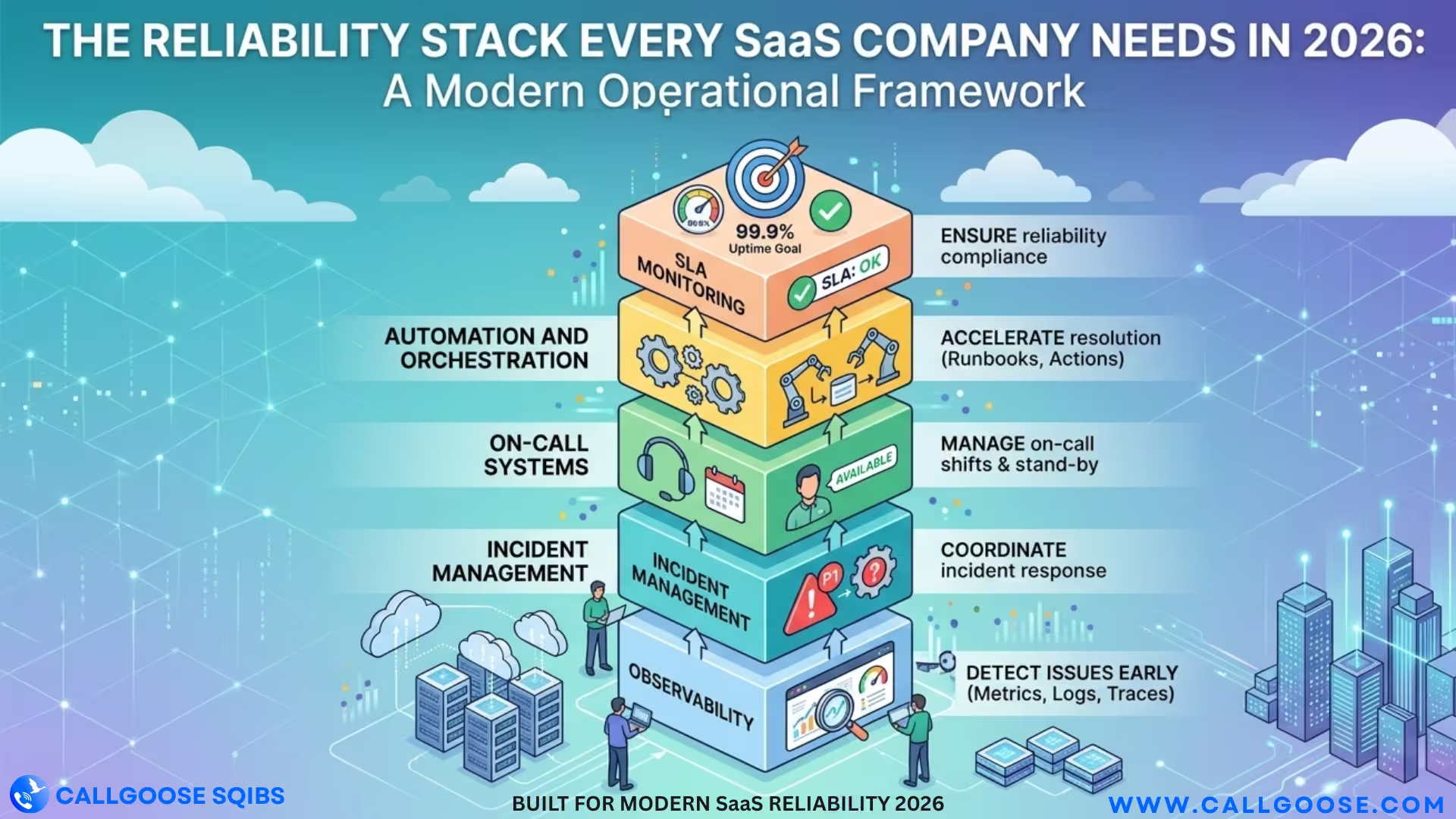
CALLGOOSE
CALLGOOSE
BLOG
12 March 2026 | Sophia Mark
5 Minute Read
Introduction
In the modern SaaS economy, uptime has become one of the most commonly advertised reliability metrics. Many companies proudly promote 99.9%, 99.95%, or even 99.99% uptime guarantees as proof of their platform’s reliability.
However, a surprising number of SaaS companies track uptime incorrectly or misunderstand what these numbers truly represent. In many cases, uptime is measured using simplified assumptions that fail to reflect the real customer experience.
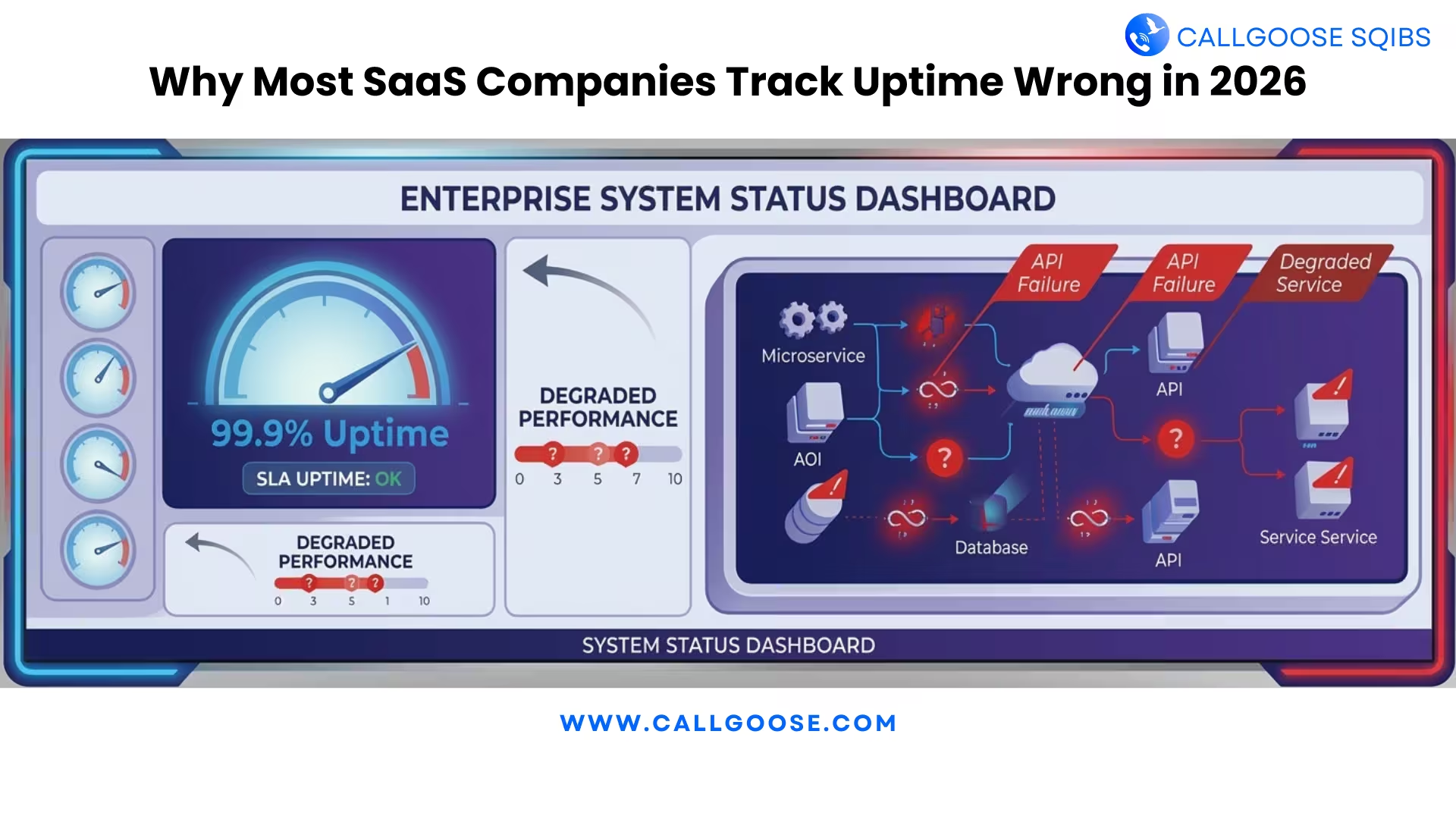
As SaaS infrastructure grows more complex in 2026, spanning microservices, cloud regions, APIs, and third-party dependencies, traditional uptime tracking methods are no longer sufficient.
This article explores:
The Problem with Traditional Uptime Tracking
Historically, uptime monitoring was simple. A server was either up or down. Monitoring tools would ping a service endpoint every few minutes and record availability.
But modern SaaS platforms are far more complex. A typical SaaS product may depend on:
In this environment, a system may technically be “up” while users are still experiencing serious problems.
For example:
Traditional uptime tracking often fails to capture these scenarios.
This is why many SaaS companies unknowingly report high uptime percentages while customers still experience poor reliability.
What 99.9%, 99.95%, and 99.99% Uptime Actually Mean
Uptime percentages sound impressive, but they are often misunderstood.
Here is what these numbers actually represent over a full year:

Even a small difference in percentage can represent several hours of downtime.
For example:
Many SaaS providers advertise uptime guarantees without clearly understanding how downtime is calculated.
Industry research from the Uptime Institute has shown that service outages remain common even among mature cloud platforms, and their financial impact continues to grow each year.
This makes accurate uptime measurement increasingly important.
Why Uptime Alone Is a Misleading Reliability Metric
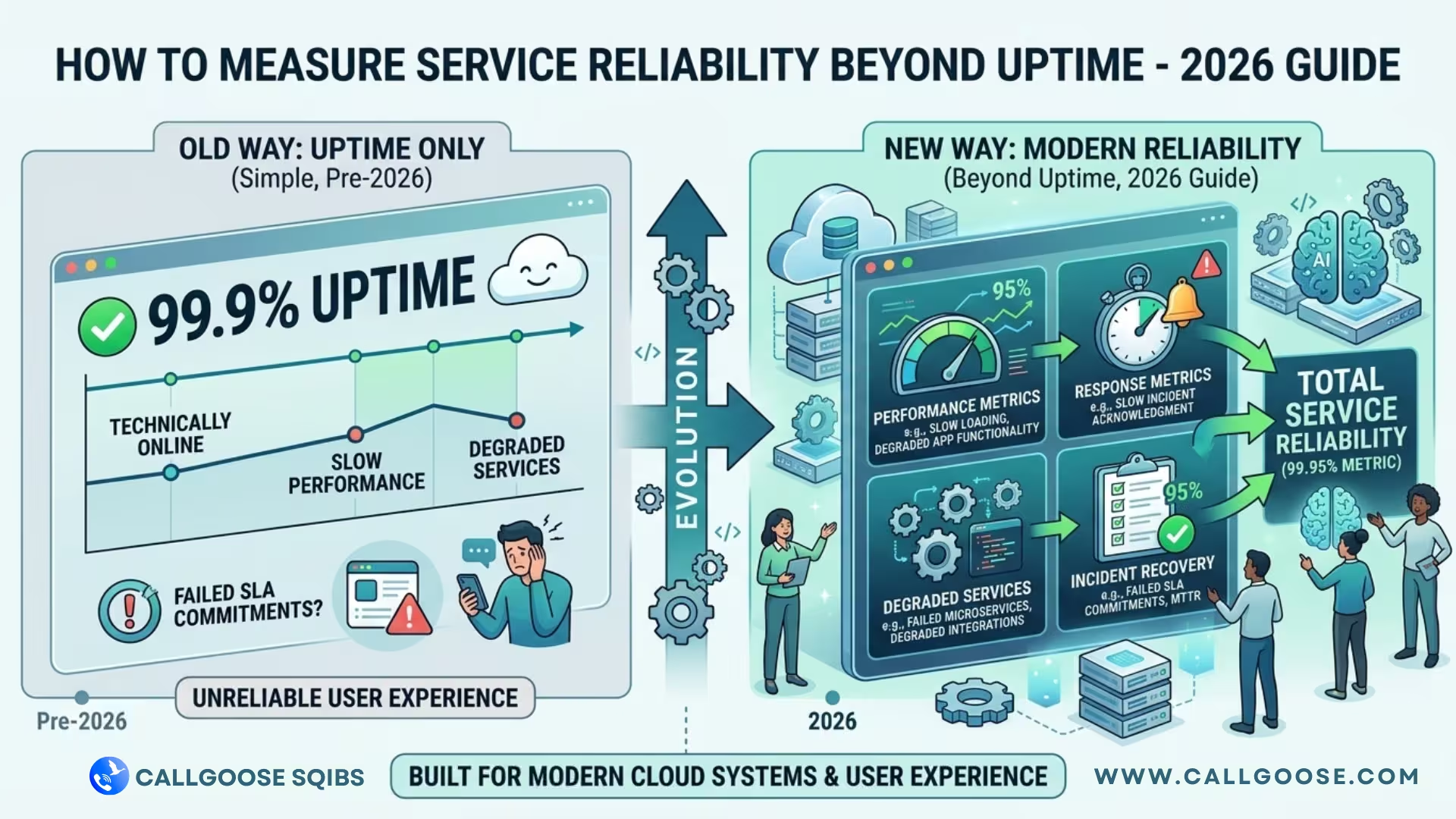
Uptime percentages only measure whether a system is technically reachable. They do not capture the quality of the service during that uptime.
A service can remain technically “available” while still providing a poor user experience.
Examples include:
Slow System Performance
The application responds but takes several seconds or minutes to complete actions.
Partial Feature Failures
Certain components stop working while the rest of the platform remains operational.
API Failures
Public APIs may return errors while the main interface appears functional.
Authentication or Payment Errors
Critical workflows may fail even though the application is accessible.
In these situations, uptime monitoring tools may still report 100% availability, even though customers are experiencing serious disruptions.
This disconnect between technical uptime and real user experience is one of the biggest weaknesses of traditional monitoring approaches.
The Difference Between Downtime, Degraded Performance, and Response Time
To understand reliability correctly, SaaS companies must differentiate between several operational states.
Downtime
Downtime occurs when a service becomes completely unavailable to users.
Examples include:
Downtime is the most obvious type of incident and is usually captured by uptime monitoring tools.
Degraded Performance
Degraded performance occurs when the service remains available but performs poorly.
Examples include:
Although the system is technically operational, users may still be unable to complete their tasks effectively.
Degraded performance incidents often go undetected by simple uptime monitoring.
Incident Response Time
Another critical factor in service reliability is how quickly teams respond when problems occur.
Two important operational metrics measure this:
Slow response times can dramatically increase the total impact of an outage.
This is why many organizations now monitor incident response metrics alongside uptime metrics.
Why Incident-Based SLA Monitoring Is More Accurate
Traditional uptime monitoring typically focuses on system availability checks.
Modern reliability platforms use incident-based SLA monitoring, which evaluates service performance based on real operational incidents.
Instead of relying solely on ping checks, incident-based monitoring considers:
This provides a much more accurate representation of how incidents affect service reliability.
Organizations can track:
This approach aligns much more closely with the actual customer experience.
The Role of SLA Trackers in Modern SaaS Operations
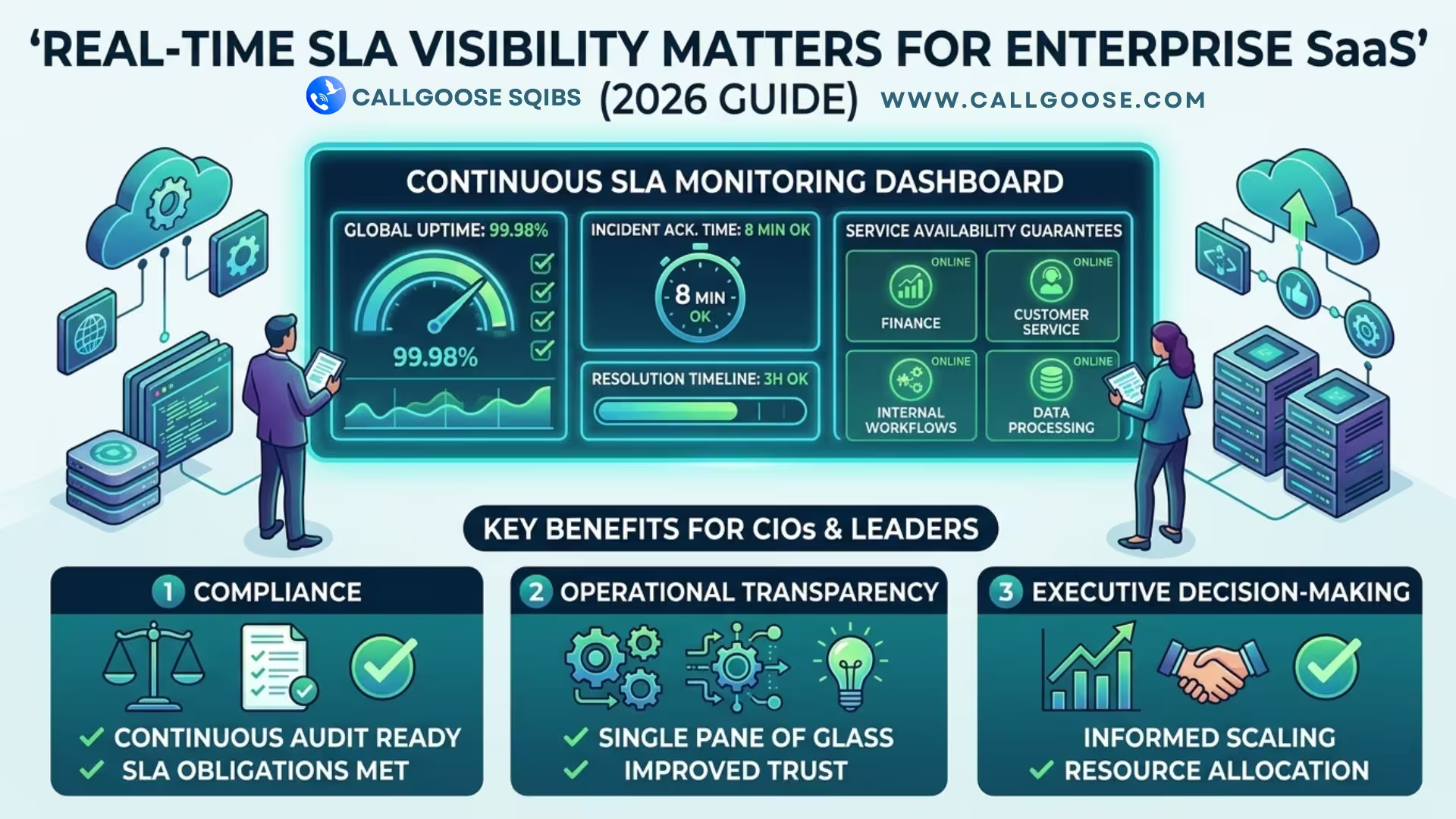
An SLA Tracker helps organizations measure whether service reliability meets contractual or internal targets.
Rather than relying on manual calculations or spreadsheets, SLA trackers automatically monitor:
When incidents affect services covered by an SLA, the system automatically evaluates how the incident impacts overall SLA compliance.
This enables teams to detect potential SLA risks early and take corrective action before violations occur.
Automated SLA tracking has become essential for organizations operating under strict uptime commitments.
Automated Downtime Calculation
One of the most valuable capabilities of modern SLA tracking systems is automated downtime calculation.
Instead of relying on manual incident reports, downtime is calculated automatically using incident timelines.
This includes:
Automated calculations eliminate human error and provide accurate SLA reporting.
They also allow organizations to generate reliable uptime reports for customers, management, and compliance audits.
Building a More Accurate Reliability Strategy
To track uptime effectively, SaaS companies must move beyond simple availability checks.
A modern reliability strategy should include:
Incident-Based Monitoring : Track reliability based on real incidents affecting services.
Response-Time Monitoring: Measure MTTA and MTTR to ensure teams respond quickly during outages.
SLA Tracking: Automatically monitor service reliability against defined uptime commitments.
Real-Time Alerts: Detect SLA risks early and notify responsible teams immediately.
These practices provide a much more realistic view of service reliability.
Supporting Modern Reliability Operations with Callgoose SQIBS
Platforms such as Callgoose SQIBS help SaaS organizations implement advanced reliability monitoring by combining:
These capabilities allow organizations to track uptime accurately while also enforcing strong incident response discipline.
Callgoose SQIBS supports both SaaS and self-hosted deployment models, giving teams flexibility to choose the infrastructure model that best matches their security and operational requirements.
Final Thoughts
Uptime percentages remain an important reliability metric, but they are no longer sufficient on their own.
In modern SaaS environments, true service reliability depends on:
Companies that rely solely on basic uptime monitoring risk overlooking serious reliability issues that affect their customers.
By adopting incident-based SLA tracking and response monitoring, SaaS organizations can gain a much clearer picture of their operational performance and ensure that their uptime promises truly reflect the experience their customers receive.
🔗 Get Started with Callgoose SQIBS: Try Now
If you're managing critical IT systems or have customer-facing platforms, Callgoose SQIBS is a game-changer! 💡 It’s designed to quickly fix issues, reduce downtime, and boost your support team’s productivity.
Callgoose SQIBS is a cutting-edge automation platform designed to elevate your organization's resilience, reliability, and operational efficiency. With powerful On-Call scheduling, real-time Incident Management, SLA Tracker and Incident Response capabilities, it ensures your systems are always on and responsive. Whether you need Process Automation, Runbook Automation, Incident Auto-remediation, IT request automation, or Event-Driven Automation and Self-service portal, Callgoose SQIBS empowers you with comprehensive solutions. Stay connected and in control with notifications via Mobile App (Android, iPhone), Email, SMS, Phone Calls in over 30+ languages across 200+ countries, and seamless integrations with Slack & Microsoft Teams. Empower your team to Trigger, Acknowledge, Resolve Incidents and Run Automation Workflow directly from Slack & Microsoft Teams.
Check out these videos to see how it works:
• Watch our quick 30-second video : Watch Here
• What is Callgoose SQIBS? : Watch Here
• Process Automation : Watch Here
• Runbook Automation : Watch Here
• Self-Service Portal : Watch Here
• SLA Tracker : Watch Here
Additionally, here is a helpful blog post on
• why businesses choose Callgoose SQIBS: Why Business Need to Choose Callgoose SQIBS
• Transforming Business Operations with Callgoose SQIBS - Incident Management & Automation Platform
• How Callgoose SQIBS Automation Platform Enhances Efficiency
• Use Cases Industry Sector-wise
• Solutions – By Functionality
Ready to Transform Your Incident Response?
See Callgoose SQIBS in action by exploring our website visit www.callgoose.com, or book a demo to discover how Callgoose SQIBS can optimize your workflows and boost your team’s productivity.
Let’s Talk! Reach out to us today to learn more or get personalized support.
Take the next step toward seamless automation and efficiency. We’re here to assist you every step of the way.
Take Control of Incidents – Anytime, Anywhere!
Looking forward to connecting with you!
BLOG
5m Read
BLOG
5m Read

CALLGOOSE
SQIBS
Advanced Automation-first platform with effective On-Call scheduling, real-time Incident Management, Incident Response, and SLA tracking capabilities that keep your organization more resilient, reliable, and always on.
Callgoose SQIBS can integrate with any applications or tools you use, including monitoring, ticketing, ITSM, log management, error tracking, ChatOps, collaboration tools, or any custom applications.
In addition to alerting and response, Callgoose SQIBS enables Automated Incident Remediation, SLA tracking (MTTA, MTTR, uptime), and Incident Response Threshold monitoring, allowing teams to proactively detect risks, prevent SLA breaches, and execute remediation workflows in real time.
A built-in self-service portal empowers end users to handle routine requests independently, significantly reducing operational load on engineering and IT teams.
Callgoose provides enterprise-grade automation, SLA governance, and incident response capabilities at one of the most cost-effective price points in the market.
Unique Features