
CALLGOOSE
CALLGOOSE
BLOG
16 March 2026 | Sophia Mark
5 Minute Read
Introduction
Service Level Agreements (SLAs) are fundamental to modern SaaS and IT service operations. They define the reliability and performance commitments that organizations make to their customers. These commitments often include uptime guarantees, response times, and resolution timelines.
Despite the importance of these commitments, many organizations still track SLA performance using spreadsheets. While spreadsheets may seem simple and accessible, they quickly become inefficient and unreliable when used for operational SLA monitoring.
In 2026, as SaaS platforms grow more complex and incidents occur across distributed systems, manual SLA tracking methods can introduce serious operational risks.
This article explores why spreadsheet-based SLA tracking fails, the risks it creates for organizations, and why automated SLA monitoring has become essential for modern service operations.
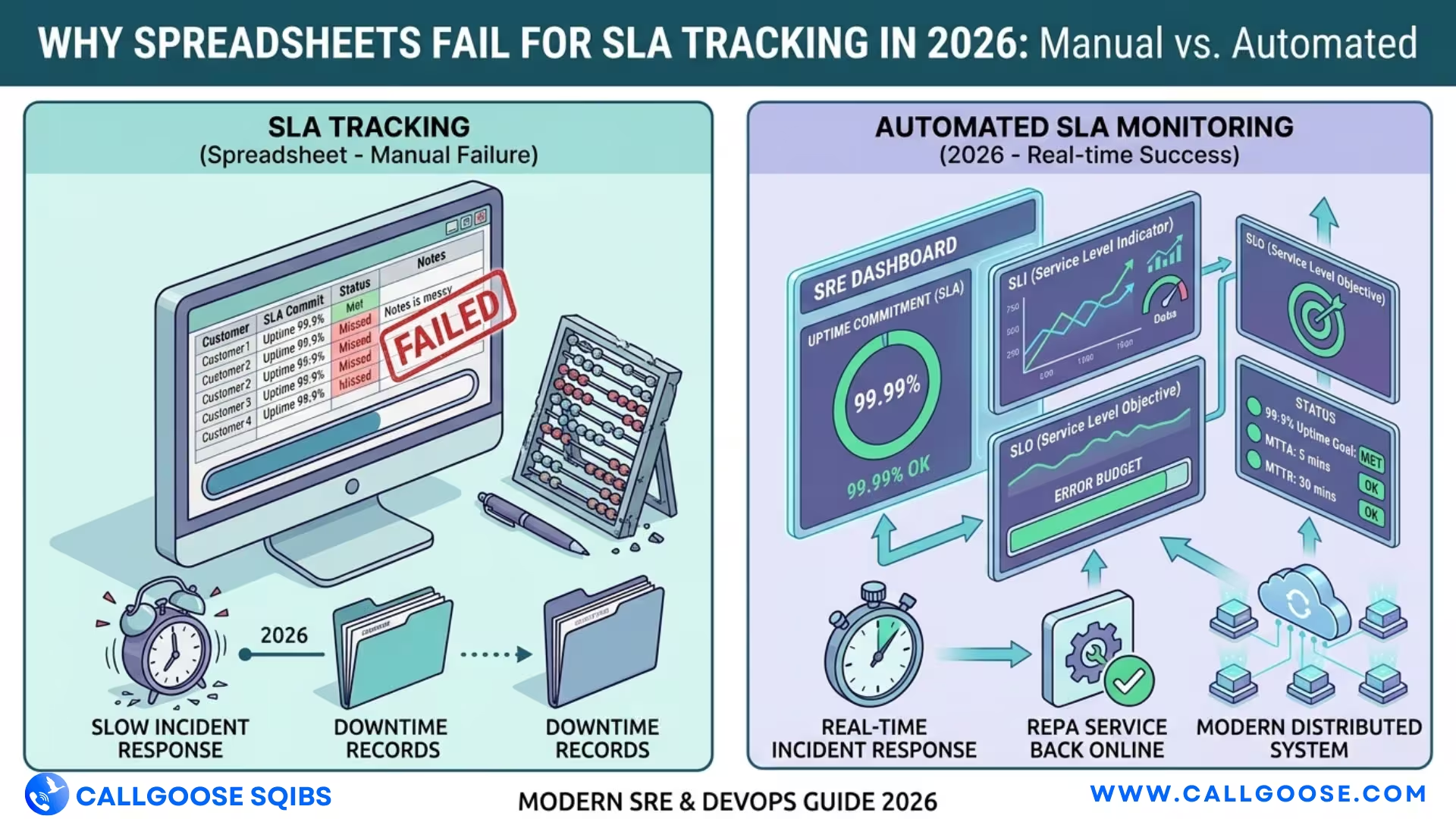
The Traditional Approach to SLA Tracking
For many organizations, SLA tracking begins with a spreadsheet that contains:
Teams manually enter incident start and resolution times, calculate downtime, and track whether SLA thresholds have been breached.
While this approach might work for small environments with limited incidents, it becomes extremely difficult to manage as services scale.
As infrastructure grows and incident frequency increases, spreadsheet-based SLA tracking becomes time-consuming, error-prone, and difficult to maintain.
The Problem with Manual SLA Calculations
One of the biggest limitations of spreadsheets is the reliance on manual calculations.
SLA compliance often depends on multiple variables, including:
Manually entering and calculating these values introduces several challenges:
Time-Consuming Processes
Teams must constantly update incident timelines and recompute SLA metrics whenever new incidents occur.
This creates additional operational overhead for engineering and operations teams.
Formula Complexity
As SLA rules become more complex, spreadsheets require complicated formulas that are difficult to maintain and validate.
A small change in calculation logic can require extensive updates across multiple sheets.
Difficulty Handling Multiple Services
Modern SaaS platforms may contain dozens or hundreds of services. Tracking SLA performance across multiple services within spreadsheets quickly becomes unmanageable.
These limitations make manual SLA tracking inefficient for modern operational environments.
Human Error in SLA Monitoring
Manual data entry introduces a high risk of human error.
Common mistakes include:
Even a small error in downtime calculation can significantly distort SLA results.
For organizations operating under strict uptime commitments, inaccurate calculations can lead to:
Reliability data must be accurate and consistent, which is difficult to achieve through manual spreadsheet processes.
Delayed SLA Breach Detection
Another major limitation of spreadsheet-based SLA tracking is the lack of real-time monitoring.
Spreadsheets typically track SLA compliance after incidents have already occurred. Teams must manually update data and evaluate whether SLA thresholds have been exceeded.
This creates a significant operational gap.
By the time an SLA breach is discovered in a spreadsheet:
In contrast, modern incident management systems can detect potential SLA breaches as incidents unfold, allowing teams to take corrective action before the SLA is violated.
Lack of Real-Time Alerts
Real-time visibility is critical for maintaining service reliability.
Spreadsheets do not provide:
Without automated alerts, teams may remain unaware of emerging SLA risks.
For example:
Without automated alerts, these situations often go unnoticed until it is too late.
Integration Challenges with Modern Infrastructure
Modern SaaS environments depend on a wide range of operational tools, including:
Spreadsheets cannot easily integrate with these systems.
This creates additional challenges such as:
Industry research from the Uptime Institute indicates that operational complexity continues to increase as organizations adopt distributed architectures and cloud-native platforms.
Without proper integration, manual SLA tracking becomes increasingly difficult to maintain.
Operational Visibility Is Limited
Spreadsheets also limit the ability of organizations to gain real-time visibility into service reliability.
Executives and engineering leaders often need answers to questions such as:
Extracting these insights from spreadsheets requires manual analysis and reporting.
Modern platforms provide real-time dashboards and automated reports, making it easier to monitor operational performance across teams and services.
Why Automated SLA Tracking Is the Modern Solution
To overcome the limitations of spreadsheets, organizations are increasingly adopting automated SLA tracking systems.
Automated platforms continuously monitor service performance and calculate SLA compliance based on real incident data.
Key advantages of automated SLA monitoring include:
Automatic Downtime Calculation
Downtime is calculated automatically based on incident timelines, eliminating manual calculations.
Real-Time SLA Monitoring
Systems continuously track SLA performance and detect potential breaches early.
Automated Alerts and Escalations
Teams receive immediate notifications when SLA thresholds approach critical limits.
Integration with Incident Management
Incident timelines automatically feed into SLA calculations, ensuring accurate and consistent reporting.
Centralized Reliability Visibility
Dashboards provide a clear view of SLA performance across services, teams, and products.
These capabilities help organizations maintain strong operational discipline while reducing manual overhead.
Improving SLA Reliability with Automation
Automation does not just improve efficiency it also improves reliability and accountability.
When SLA monitoring is automated:
This results in better service reliability and stronger customer trust.
Automated systems also provide reliable historical data that organizations can use for capacity planning, performance analysis, and operational improvements.
Supporting Automated SLA Monitoring with Callgoose SQIBS
Modern incident management platforms such as Callgoose SQIBS provide built-in capabilities for automated SLA monitoring.
These platforms integrate incident management workflows with SLA tracking, enabling organizations to:
By combining incident management with SLA monitoring, organizations gain full visibility into both service reliability and incident response performance.
Callgoose SQIBS supports both SaaS deployment and self-hosted environments, allowing teams to choose the infrastructure model that aligns with their operational and compliance requirements.
Final Thoughts
Spreadsheets may have been sufficient for early-stage SLA tracking, but they are no longer suitable for modern SaaS operations.
Manual calculations, human error, delayed breach detection, and the lack of real-time alerts create significant risks for organizations that rely on spreadsheet-based SLA monitoring.
As service architectures grow more complex and reliability expectations continue to increase, automated SLA tracking has become essential.
By adopting automated monitoring platforms that integrate incident management with SLA tracking, organizations can eliminate operational inefficiencies, improve accuracy, and maintain stronger control over service reliability.
In 2026, the organizations that succeed will be those that move beyond manual tracking and embrace automation-driven reliability management.
🔗 Get Started with Callgoose SQIBS: Try Now
If you're managing critical IT systems or have customer-facing platforms, Callgoose SQIBS is a game-changer! 💡 It’s designed to quickly fix issues, reduce downtime, and boost your support team’s productivity.
Callgoose SQIBS is a cutting-edge automation platform designed to elevate your organization's resilience, reliability, and operational efficiency. With powerful On-Call scheduling, real-time Incident Management, SLA Tracker and Incident Response capabilities, it ensures your systems are always on and responsive. Whether you need Process Automation, Runbook Automation, Incident Auto-remediation, IT request automation, or Event-Driven Automation and Self-service portal, Callgoose SQIBS empowers you with comprehensive solutions. Stay connected and in control with notifications via Mobile App (Android, iPhone), Email, SMS, Phone Calls in over 30+ languages across 200+ countries, and seamless integrations with Slack & Microsoft Teams. Empower your team to Trigger, Acknowledge, Resolve Incidents and Run Automation Workflow directly from Slack & Microsoft Teams.
Check out these videos to see how it works:
• Watch our quick 30-second video : Watch Here
• What is Callgoose SQIBS? : Watch Here
• Process Automation : Watch Here
• Runbook Automation : Watch Here
• Self-Service Portal : Watch Here
• SLA Tracker : Watch Here
Additionally, here is a helpful blog post on
• why businesses choose Callgoose SQIBS: Why Business Need to Choose Callgoose SQIBS
• Transforming Business Operations with Callgoose SQIBS - Incident Management & Automation Platform
• How Callgoose SQIBS Automation Platform Enhances Efficiency
• Use Cases Industry Sector-wise
• Solutions – By Functionality
Ready to Transform Your Incident Response?
See Callgoose SQIBS in action by exploring our website visit www.callgoose.com, or book a demo to discover how Callgoose SQIBS can optimize your workflows and boost your team’s productivity.
Let’s Talk! Reach out to us today to learn more or get personalized support.
Take the next step toward seamless automation and efficiency. We’re here to assist you every step of the way.
Take Control of Incidents – Anytime, Anywhere!
Looking forward to connecting with you!

BLOG
5m Read
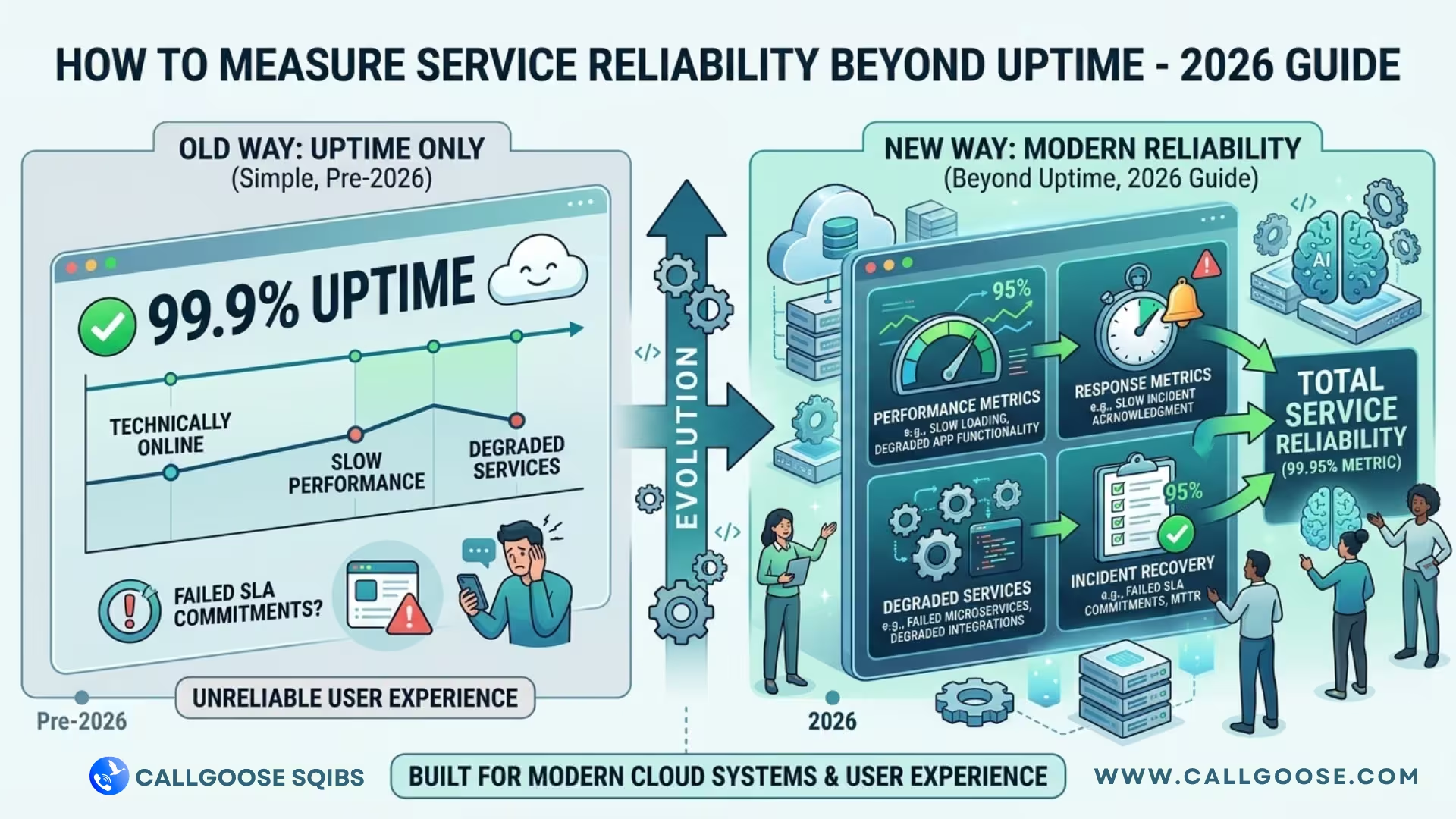
BLOG
5m Read
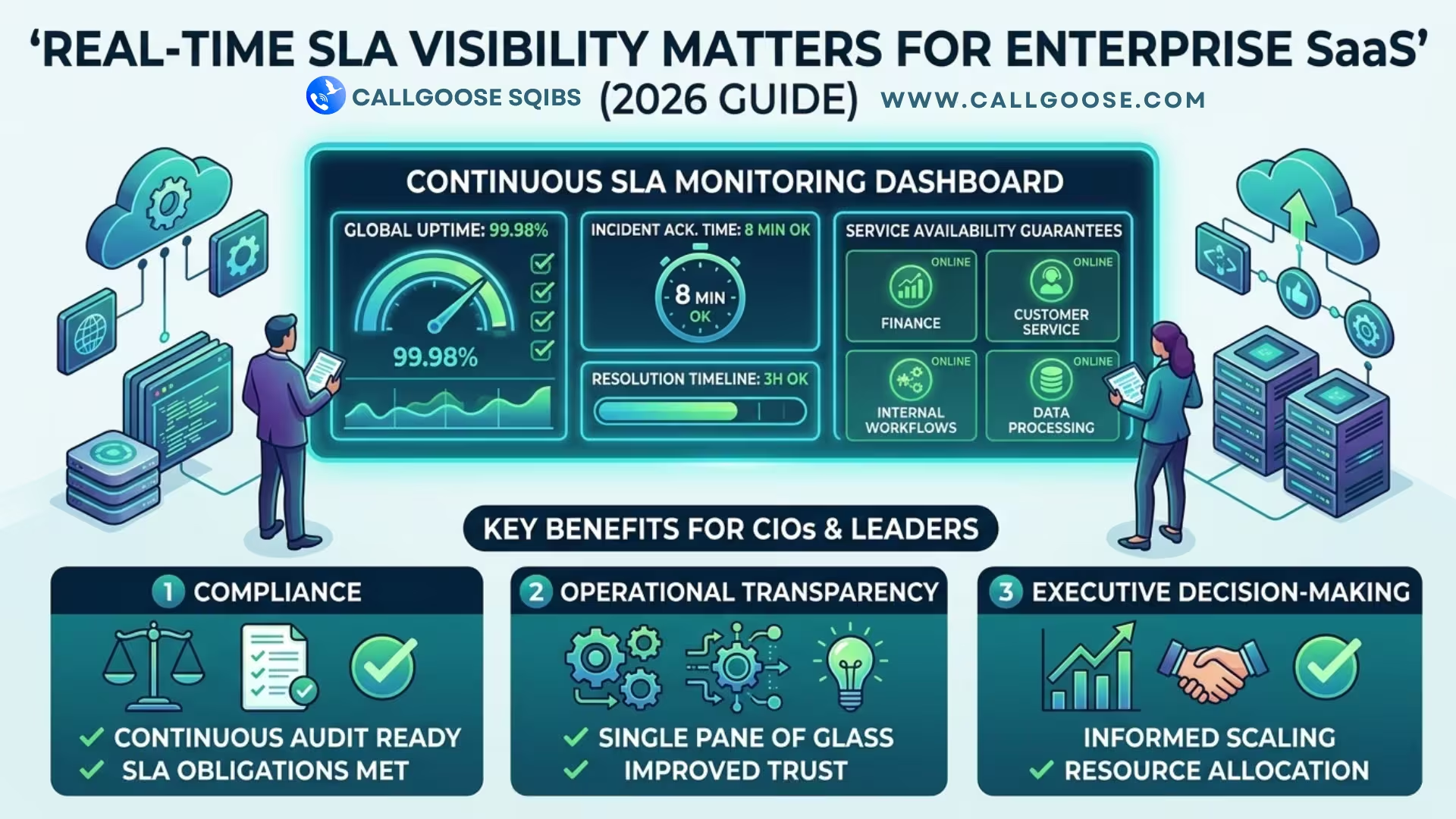
BLOG
5m Read

CALLGOOSE
SQIBS
Advanced Automation-first platform with effective On-Call scheduling, real-time Incident Management, Incident Response, and SLA tracking capabilities that keep your organization more resilient, reliable, and always on.
Callgoose SQIBS can integrate with any applications or tools you use, including monitoring, ticketing, ITSM, log management, error tracking, ChatOps, collaboration tools, or any custom applications.
In addition to alerting and response, Callgoose SQIBS enables Automated Incident Remediation, SLA tracking (MTTA, MTTR, uptime), and Incident Response Threshold monitoring, allowing teams to proactively detect risks, prevent SLA breaches, and execute remediation workflows in real time.
A built-in self-service portal empowers end users to handle routine requests independently, significantly reducing operational load on engineering and IT teams.
Callgoose provides enterprise-grade automation, SLA governance, and incident response capabilities at one of the most cost-effective price points in the market.
Unique Features